Essential automated gate maintenance for your South Florida home
A stunning automated gate enhances your property’s curb appeal, security, and convenience. However, in South Florida’s harsh climate, consistent automated gate maintenance is non-negotiable. The intense sun, high humidity, salt air, and heavy rainfall can wreak havoc on mechanical and electronic components. This guide will equip you with essential tips to protect your investment. From regular system checks to proper protection of key parts, we will cover everything you need to know. Proper automated gate maintenance will extend the life of your gate and ensure reliable operation for years. Let’s dive in and help you safeguard your convenience and security!
Understanding the Impact of South Florida’s Climate on Automated Gates
South Florida’s sun, humidity, and salt pose unique challenges for automated gate systems. Constant UV exposure can fade and degrade housing materials and wiring. High humidity and salt air accelerate corrosion on metal components, hinges, and electrical contacts. Heavy rain and storms can lead to water intrusion, causing short circuits and motor damage. This environment also encourages wear on moving parts. Regular automated gate maintenance is your first line of defense against these issues and unexpected failures.
Choosing the Right Type of Automated Gate for Our Climate
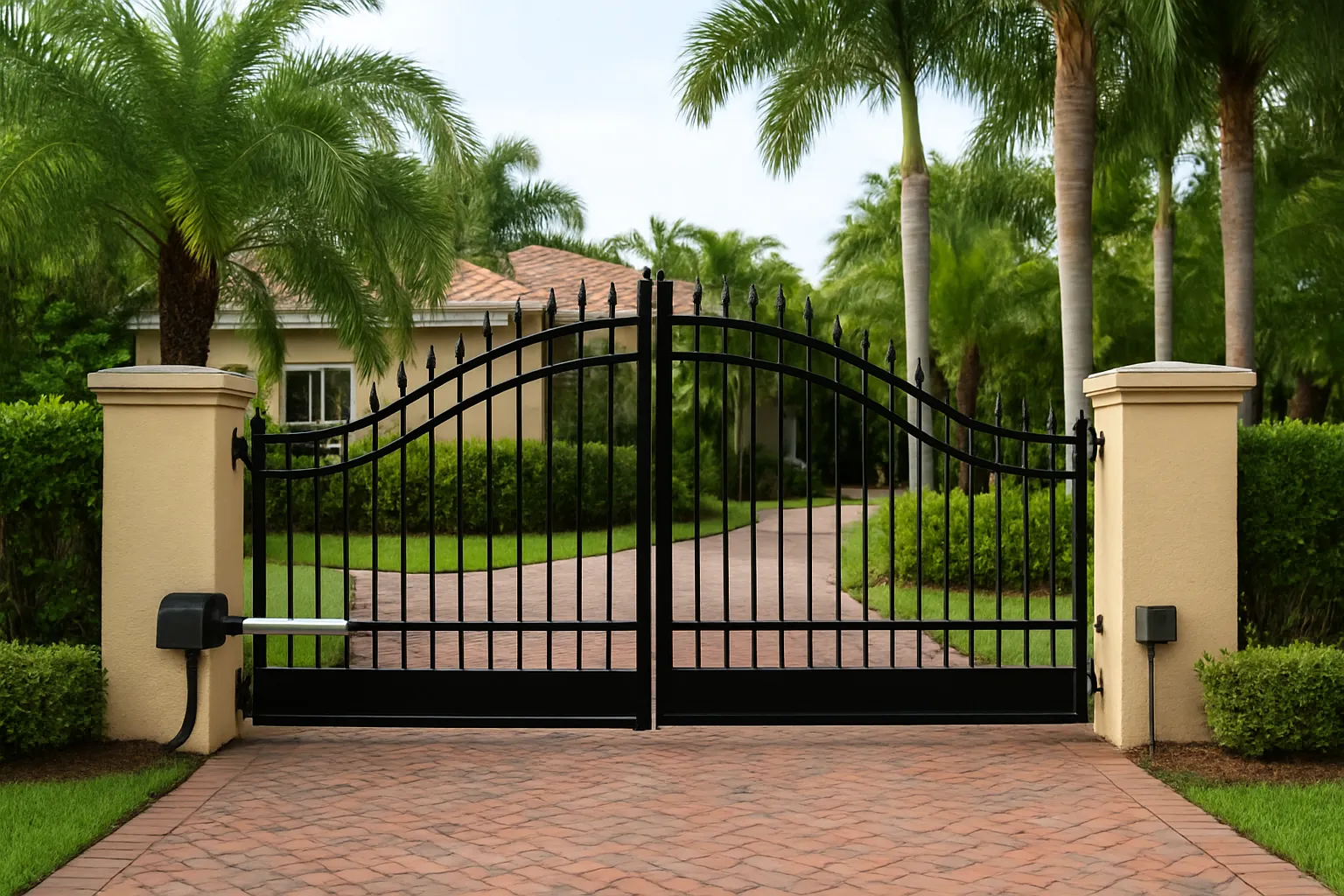
Selecting the correct materials and design is crucial for longevity. Opt for systems with marine-grade or powder-coated aluminum and stainless-steel hardware to resist corrosion. Ensure the motor/operator is housed in a weatherproof, ventilated enclosure. Even the best systems require a solid automated gate maintenance plan to withstand our climate’s relentless conditions.
Essential Tools for Your Automated Gate Maintenance
Having the right tools makes automated gate maintenance much easier. You will need basic tools like screwdrivers and wrenches for adjustments. A multimeter is invaluable for checking electrical connections and battery health (for solar or backup systems). Silicone lubricant is essential for hinges and tracks, while a soft cloth and mild cleaner help with housing. Keeping the manual for your specific model on hand is also a key tool.
Regular Inspection: What to Look For
Conduct a visual and operational inspection monthly. Look for signs of rust or corrosion on metal parts. Check for loose bolts, misaligned tracks, or unusual sounds during operation. Test safety features like auto-reverse and ensure photocells are clean and aligned. Examine the condition of wiring for cracks or wear. This proactive step is a cornerstone of effective automated gate maintenance and safety.
Cleaning Your Gate System: Best Practices
First, remove debris like leaves and dirt from the gate tracks and hinges. Gently clean the housing and visible components with a soft cloth and a mild, non-corrosive cleaner to remove salt spray and grime. Carefully clean the safety sensor lenses. Avoid using a high-pressure washer directly on electrical components or bearings. A clean system is less prone to corrosion and obstruction.
Sealing and Protecting: Guarding Against Moisture and Corrosion
Protecting your system from the elements is critical. Apply a silicone-based lubricant to all moving metal parts—hinges, rollers, locks—to repel water and prevent seizing. Check and replace weather seals around control boxes if they are cracked. Ensure drainage holes in the operator housing are clear. Applying a automotive-grade protectant to plastic components can guard against UV damage. Reapplying lubricant and checking seals should be a regular part of your automated gate maintenance strategy.
Seasonal Maintenance Tips for South Florida
Your maintenance routine should adapt to the seasons. Before hurricane season, perform a thorough inspection, secure any loose components, and ensure the manual release mechanism works smoothly. During the rainy season, pay extra attention to signs of water intrusion and lubrication. In the hot, dry months, check for UV damage to wiring and housing, and ensure the system isn't overheating. Seasonal checks are a smart way to manage your automated gate maintenance.
Hiring Professional Help vs. DIY Maintenance
You can handle many automated gate maintenance tasks yourself, like basic cleaning, lubrication, and visual inspections. DIY is cost-effective for regular upkeep.
However, for complex electrical diagnostics, motor issues, realigning the gate, or reprogramming remotes and keypads, you need expert help. Professionals have the specialized tools and expertise to ensure safe and lasting repairs. At XL Fencing, we specialize in diagnosing and fixing these exact problems with automated systems. Our team provides comprehensive services, from gate repair and motor replacement to full automated installations, ensuring your system gets the best care possible.
Why choose our fence company? We save you time, provide durable results with commercial-grade components, and offer the peace of mind that comes with a secure, functioning gate. While DIY maintenance is great for upkeep, professional intervention protects your investment from major damage and security risks.
Conclusion
Consistent care is the key to a long-lasting, secure, and convenient automated gate in South Florida. By following this automated gate maintenance guide, you can prevent common issues and preserve your property’s safety and value. Remember, for electrical work, major adjustments, or any complex repairs, XL Fencing is here to help. Contact us today for a professional inspection and keep your automated gate operating perfectly!