Walk any new Broward or Palm Beach neighborhood this year and the fence lines look different than they did even three years ago — lower-profile, darker, smarter, and built to shrug off a Category 4. Fence trends in South Florida for 2026 are being driven by three forces at once: a design shift toward clean, modern lines; homeowners who want less maintenance in a salt-air climate; and a building code that keeps raising the bar on wind resistance. XL Fencing has installed fences across the region since 2015 (licensed U-22428 in Broward, 20-F22100-R in Palm Beach, 4.7★ across 260 reviews), and the patterns below are the ones showing up on real quote sheets right now. Here are the seven trends defining South Florida yards this year — and what each one actually means for your property, your budget, and your maintenance calendar.
1. Matte Black Aluminum Is the New Default
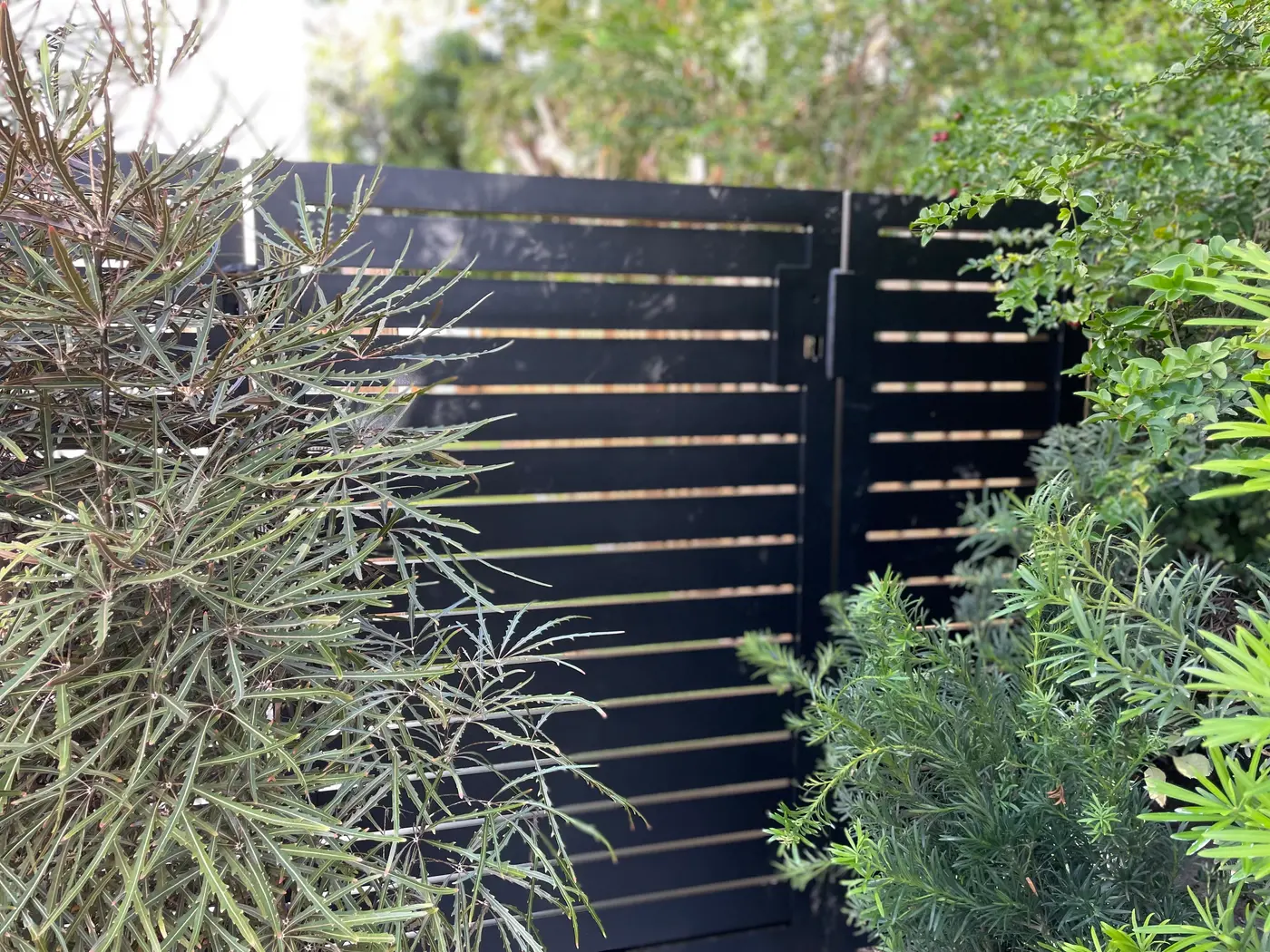
Powder-coated matte black aluminum has quietly become the region's default residential fence. It reads as modern and high-end, disappears visually so your landscaping and pool do the talking, and — unlike wood or raw steel — it doesn't rust or fade in coastal humidity. Black pairs with everything: white stucco, gray pavers, tropical greenery. The 2026 evolution is subtle: wider picket spacing and flat-top rails instead of the spear-top "spec-house" look, giving a cleaner, more architectural silhouette. There's a practical reason it dominates here specifically — aluminum won't corrode the way steel or iron does within a few miles of the coast, and the powder coat is baked on rather than painted, so it resists chipping and UV fade far longer than a field-applied finish. Expect a modest premium over standard bronze or white, but that coating is what protects the metal, so it pays for itself in longevity. If you're weighing finishes and grades, our ultimate guide to black aluminum fencing breaks down where the money actually goes and which grades survive salt air. This is the safest "won't look dated in five years" pick on the list.
2. Horizontal Lines and Mixed Materials
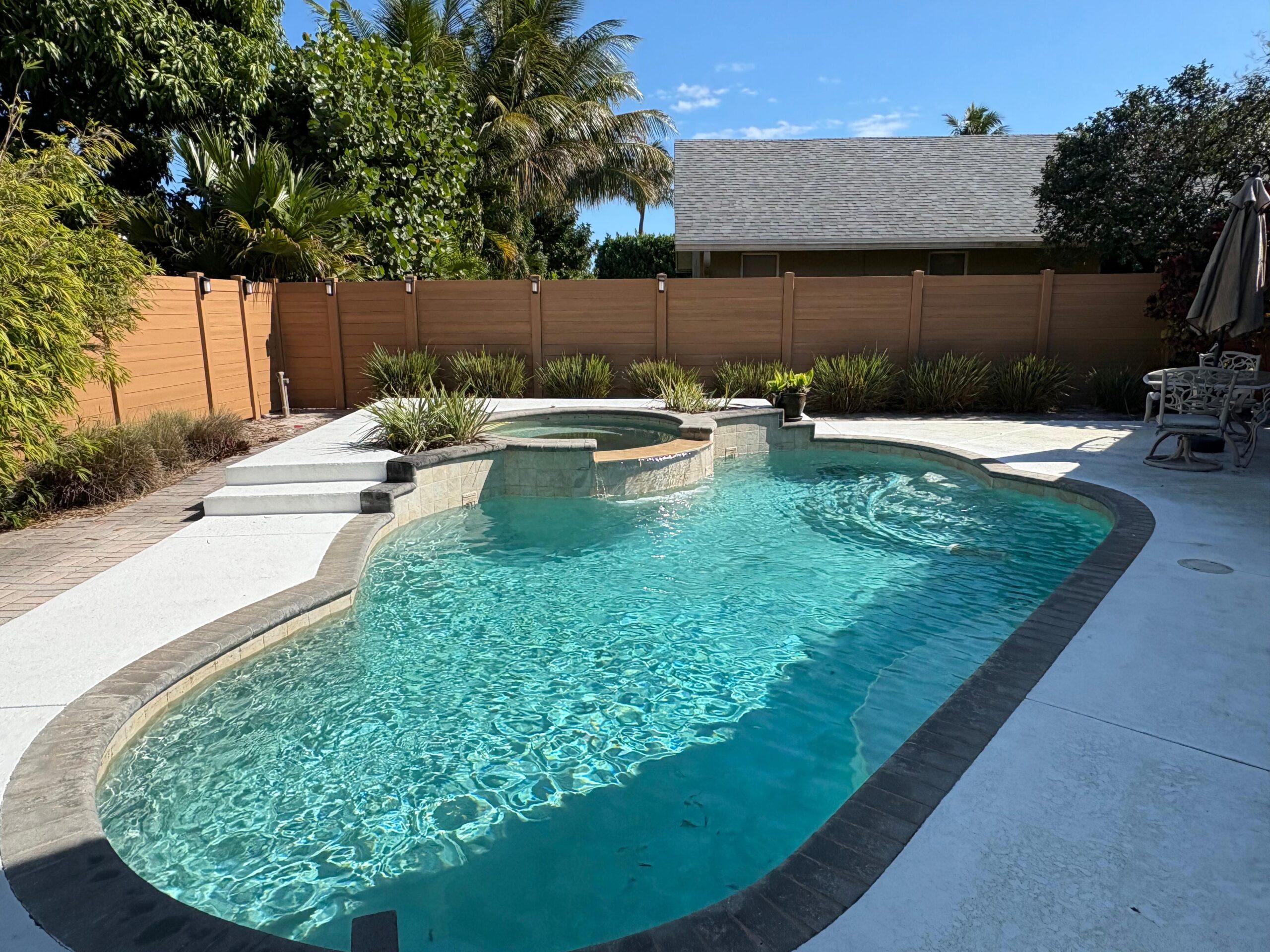
The single biggest aesthetic shift is orientation. Horizontal-slat panels — whether composite, aluminum, or vinyl styled to mimic slats — have overtaken the traditional vertical-picket look for homeowners chasing a contemporary feel. Designers are pairing them with mixed materials: an aluminum frame with composite infill, or masonry pillars anchoring horizontal runs between them. The effect is warmer and more custom than a single-material run, and it lets you break up a long street-facing fence into distinct "panels" of texture and shadow. The trade-off is cost and installation precision — horizontal runs telegraph any grade change or post that's out of plumb, so gapping has to be dead consistent across the whole line. On South Florida's flat but not perfectly level lots, that means more layout time and, often, stepped or racked panels to follow the grade cleanly. This is a trend that rewards a professional install over a weekend DIY, and it's the look you now see in new construction from Boca Raton down through Fort Lauderdale and the coastal Broward cities. One more reason it's spreading: horizontal designs photograph exceptionally well, so they show up constantly on social media and in builder marketing, which feeds demand in a self-reinforcing loop. If you go this route, ask your installer about the material behind the look — a true composite slat behaves very differently in heat and sun than a vinyl or aluminum panel styled to imitate one, and the difference shows up years down the line.
3. Smart Gates and App-Controlled Access
Automation moved from luxury to expectation. In 2026 the standard driveway-gate build increasingly includes a smart controller: smartphone app entry, video intercom, license-plate or keypad codes for service and delivery, and activity logs you can check from anywhere. For families juggling landscapers, pool techs, and grocery deliveries, the appeal is control — you grant one-time access from your phone instead of handing out gate codes that never get changed. Solar-assisted operators are also gaining ground here, where the sun is reliable and trenching power to a front gate across a long driveway is expensive. The catch is that a smart gate is only as good as its installation and the hardware behind it; bargain operators corrode in salt air, and undersized motors fail under the daily cycle count a busy household puts them through. Safety sensors and proper limit settings matter too, since an automated gate is a moving mass near cars and kids. Our gates and automation service page covers the operator classes and access options we install. Budget for the gate structure and the automation as two separate line items — the motor, safety sensors, and access system often rival the cost of the gate itself.
4. Low-Maintenance Materials Win Over Wood
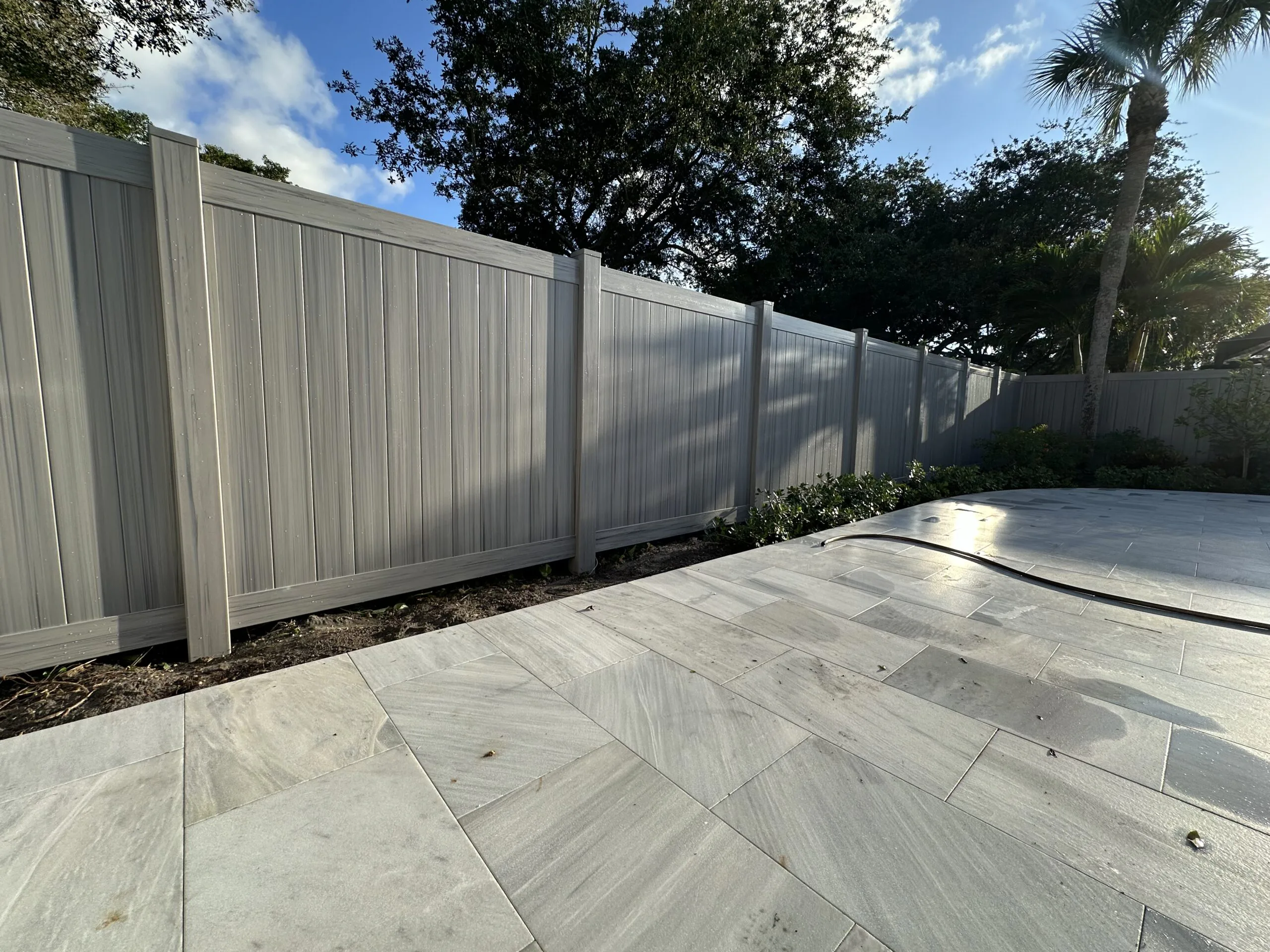
South Florida's climate is brutal on wood — heat, humidity, UV, and wood-boring insects all conspire against it, and a wood fence that looks great at install can gray, cup, and loosen within a couple of rainy seasons. So the clear 2026 trend is homeowners choosing materials that don't need annual staining or sealing. Vinyl (PVC) and modern composites lead the shift: they resist rot, won't warp in the heat, shrug off termites, and rinse clean with a garden hose. Composite in particular has closed the gap on looks, now convincingly mimicking wood grain and coming in deeper, more natural tones than the flat tans of a decade ago. Wood still has its place for buyers who want that specific natural warmth and the lowest upfront cost, but the lifetime-cost math — factoring in re-staining, board replacement, and eventual full replacement — increasingly favors the alternatives in this climate. If you're deciding between them, composite fences explained lays out the real durability and cost differences side by side. The headline: pay more once, or pay less repeatedly.
5. Hurricane-Rated Fencing Is Non-Negotiable
This is the trend that separates South Florida from the rest of the country. Fences here have to survive named storms, and both Broward and Palm Beach enforce wind-load requirements under the Florida Building Code, which incorporates the wind-load provisions of ASCE 7. In practice that means engineered footings sized for local soil, correct post spacing and embedment depth, and panel systems rated for the design wind speeds that come with our location — the same storms tracked each season by the National Hurricane Center. The 2026 shift is cultural: homeowners now ask about wind rating up front rather than treating it as fine print, partly because they've watched under-built fences fold in recent seasons. Aluminum with properly embedded posts and vinyl with reinforced rails and internal aluminum inserts are both engineered for this, and picket spacing is often specified to let wind pass through rather than catch it like a sail. A fence that isn't permitted and engineered correctly isn't a saving — it's a liability that can damage your home or your neighbor's. Any reputable installer will pull the permit and build to code; if a quote quietly skips that step to come in cheaper, that's your answer.
6. Privacy-First Backyards as "Outdoor Rooms"
The pandemic-era backyard-as-living-space idea has fully matured. In 2026, privacy is the top-requested feature for rear-yard fencing, driven by tighter lot lines in newer developments and the region's year-round outdoor living. Homeowners want full-height solid panels — vinyl, composite, or dense aluminum louver — that turn a pool deck or patio into a true "outdoor room" screened from neighbors on every side. The design refinement this year is doing it without feeling boxed in: taller solid sections near the patio where you actually sit, stepping down to semi-private runs along the side yards, and finishing tops with a clean cap rail rather than a jagged picket edge. Lighting is increasingly built in too, with low-voltage fixtures on posts to extend the usable evening hours. This trend also intersects hard with local rules — pool-barrier and self-closing, self-latching gate requirements still apply, so privacy panels around a pool have to satisfy safety codes as well as your design wishlist. Material choice matters here too: vinyl privacy panels stay bright white or tan without repainting, while composite brings a richer, wood-look tone that many homeowners prefer against tropical landscaping. Either way, full-height privacy runs carry more wind load than open pickets, so engineering and post spacing become even more important — another reason this is a professional-install trend rather than a DIY one. The result is less "wall around the yard" and more "designed enclosure built around how you actually use the space."
7. Semi-Private Hybrids and Biophilic Integration
The final trend is a reaction against the solid-wall look: hybrid designs that balance privacy with openness and airflow — genuinely important in our heat, where a solid fence can trap still, hot air against a patio. Think alternating solid-and-spaced panels, louvered sections angled to block sightlines while letting the breeze through, or a solid lower half topped with spaced pickets to keep the view of the sky. Alongside this is the "biophilic" move: integrating the fence with greenery so it reads as part of the landscape rather than a barrier. Aluminum frames doubling as climbing-plant trellises, or composite panels set behind a planted hedge of clusia or areca palm, are increasingly specified. It's a look that ties the fence into South Florida's tropical planting palette, softens the hard edge of a property line, and ages gracefully as the plantings fill in. It also tends to photograph beautifully — a real consideration for homeowners thinking about eventual resale. Done well, the fence stops looking like a fence and starts looking like landscaping.
Frequently Asked Questions
What is the most popular fence style in South Florida for 2026?
Matte black powder-coated aluminum is the most-requested residential style this year. It suits the region's modern architecture, resists corrosion in salt air, and pairs with virtually any color palette. Horizontal-slat and mixed-material designs are the fastest-growing look for homeowners specifically chasing a contemporary, custom feel over the traditional vertical picket.
Are hurricane-rated fences required in Broward and Palm Beach County?
Yes. Fences in both counties must meet the wind-load requirements of the Florida Building Code, which means engineered footings and correct post spacing for local design wind speeds. A permit and code-compliant installation are required, and reputable installers handle both as a standard part of the job rather than an upsell.
Is aluminum or vinyl better for a coastal South Florida home?
Both are excellent low-maintenance, corrosion-resistant choices. Aluminum suits modern open-picket and pool-safety applications; vinyl and composite are better for full privacy. The right pick depends on whether your priority is a see-through decorative barrier or a solid privacy screen — and many homes use both in different areas of the same property.
How much does a smart automated gate add to a fence project?
The automation — operator motor, safety sensors, and app or keypad access system — is typically a separate line item that can rival the cost of the gate structure itself. Solar-assisted operators can reduce trenching and wiring costs on front gates where running power across a long driveway is expensive.
Ready to Bring Your Fence Into 2026?
Whether you're drawn to matte black aluminum, a smart automated gate, or a private composite outdoor room, the trends above all share one requirement in South Florida: a code-compliant, wind-rated installation done right the first time. XL Fencing has served Broward and Palm Beach homeowners since 2015, and we'll help you match the right trend to your property, your HOA rules, and your budget. Call (954) 482-0531 for a free estimate — and we'll walk your yard, talk through the options above, and build something that still looks current in 2036.