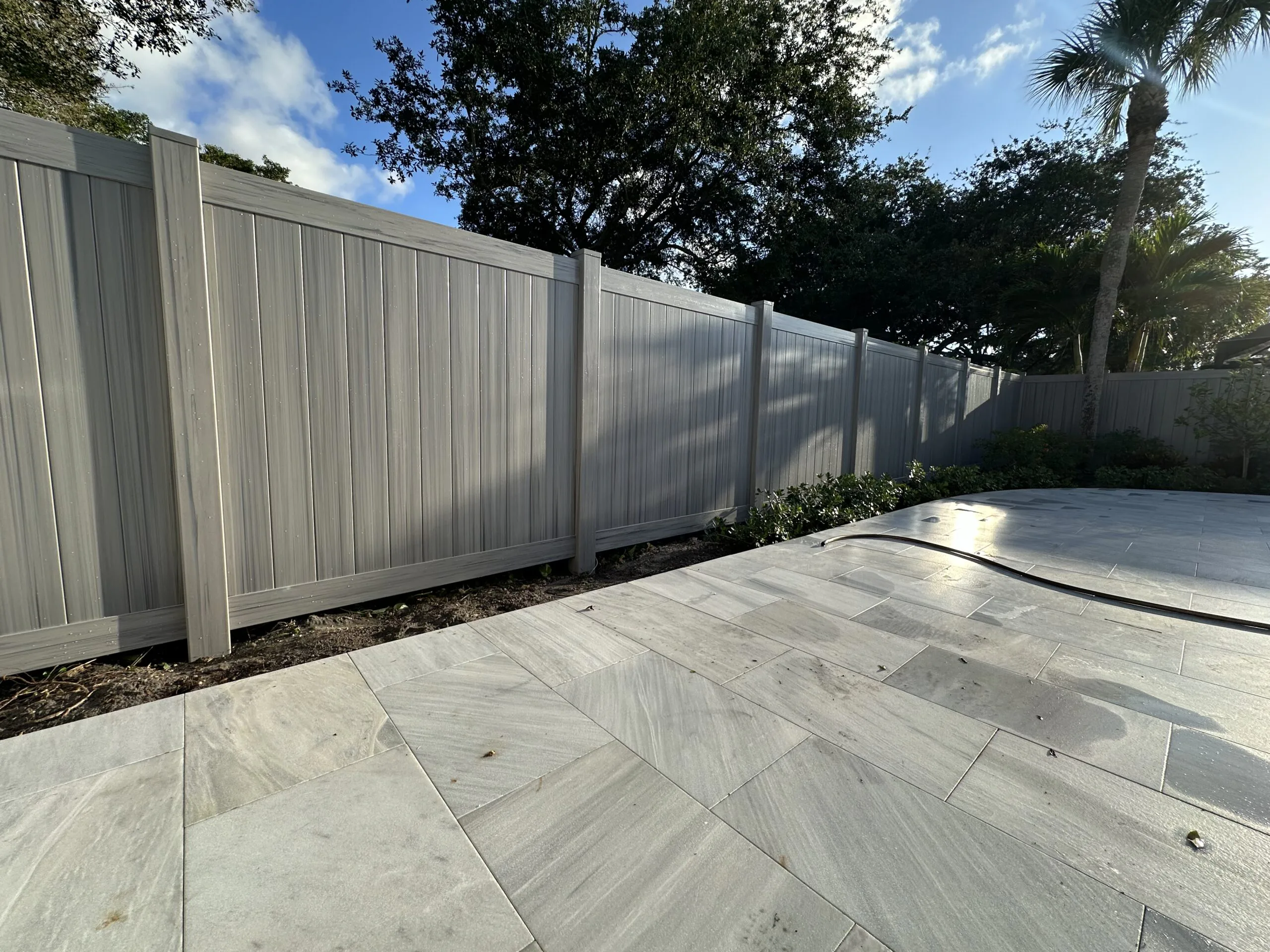
Fence expansion & contraction: Why Florida's extreme temperatures affect your vinyl fence and how proper installation prevents costly damage.
Florida sunshine feels wonderful on your skin. On your vinyl fence, it tells a completely different story. That beautiful white fence you installed last winter might look perfect today. But come August, when temperatures hit 95 degrees with relentless sun, things start happening behind the scenes.
Vinyl expands in heat. It contracts when temperatures drop. This constant movement, known as thermal expansion, puts tremendous stress on your fence system. In Florida, with our intense sun and significant seasonal temperature swings, this phenomenon becomes a critical factor in fence longevity.
Most companies install vinyl fences the same way everywhere. They don't adjust for Florida's unique conditions. They don't plan for fence expansion & contraction. The result? Buckling panels, popped rails, leaning posts, and premature failure. This article explains what causes these problems, how to spot potential issues, and what proper installation looks like in our climate.
The Science Behind Vinyl Expansion in Florida Heat
Let's start with basic physics. All materials expand when heated and contract when cooled. Vinyl, technically PVC (polyvinyl chloride), has a relatively high coefficient of thermal expansion. That's a fancy way of saying it moves more than many other building materials when temperatures change.
Consider a typical Florida day. Morning temperatures might start at 75 degrees. By afternoon, direct sun can heat the vinyl surface to 140 degrees or more. That's a 65-degree temperature swing. For a 100-foot fence line, this temperature difference can cause several inches of total expansion across the entire run.
The problem? Your fence posts are set in concrete, firmly anchored in the ground. They don't move. The rails connecting them want to expand but get squeezed between immovable posts. Something has to give. Either the rails buckle, the connections fail, or the posts themselves lean under the pressure.
Understanding fence expansion & contraction is the first step to preventing these failures. A fence installed without accounting for this movement is essentially fighting itself every single day. It's only a matter of time before it loses that battle.
Why Florida's Climate Makes This Worse Than Anywhere Else
Florida isn't just hot. It's hot in a specific way that maximises expansion challenges. Three factors combine to create perfect conditions for vinyl movement problems.
First, our intense solar radiation. The sun here isn't just warm; it's direct and powerful. Dark-colored vinyl absorbs even more heat, but even light colors get significantly hotter than the air temperature. We regularly measure fence surface temperatures 30 to 40 degrees above ambient.
Second, our seasonal temperature swings. While we don't have freezing winters like northern states, we do have noticeable variation. A fence installed in January at 50 degrees will be under completely different stress in August at 95. The total annual expansion cycle puts repeated stress on all connections.
Third, our humidity and storms. High humidity affects material properties over time. Hurricane season brings wind loads that already stress the structure. Add expansion pressure, and you have a perfect storm of forces working against your fence.
Proper fence expansion & contraction management isn't optional in Florida. It's essential for any vinyl installation that will last more than a few years.
Common Installation Mistakes That Lead to Failure
Now let's look at what happens when installers ignore expansion needs. These mistakes are unfortunately common, especially with budget-conscious contractors who learned their trade in cooler climates.
Mistake one: rigid connections. Some installers drive screws tight through rails into posts, locking everything in place. This prevents any movement whatsoever. When expansion happens, something has to break. Usually it's the rail ends or the post connections.
Mistake two: improper post spacing. Standard vinyl fence panels come in specific widths, often 6 or 8 feet. Installers who set posts exactly at these dimensions create a system with zero room for expansion. The panels are squeezed immediately, even before temperature changes.
Mistake three: poor rail selection. Some vinyl systems use hollow rails with minimal internal structure. These provide less resistance to buckling and offer fewer options for expansion-allowance features.
Mistake four: ignoring ground conditions. Sandy Florida soil behaves differently than clay or loam. Posts can shift slightly over time. Combined with expansion pressure, this shifting accelerates fence failure.
The common thread? These mistakes all ignore fence expansion & contraction as a design factor. The fence is treated as static when it's actually dynamic.
Proper Installation Techniques for Florida Conditions
So what does correct installation look like? Experienced Florida fence contractors follow specific practices that accommodate movement while maintaining structural integrity.
Technique one: slotted connection points. Quality vinyl fence systems include slotted holes where rails attach to posts. These slots allow the rail to slide slightly within the connection as expansion occurs. The screw or bolt remains tight, but the vinyl can move within the slot's range.
Technique two: strategic gap placement. Installers leave deliberate gaps between rail ends and post interiors. These gaps, usually 1/4 to 1/2 inch depending on run length, provide room for expansion without visible buckling. The gaps are hidden inside the post, invisible in the finished product.
Technique three: reinforced posts. Florida installations benefit from heavier-gauge posts with internal reinforcement. Steel or aluminum inserts within vinyl posts provide rigidity while the vinyl exterior handles appearance and weather resistance. The rigid insert takes structural loads while the vinyl handles expansion independently.
Technique four: proper concrete footings. Posts set in concrete need adequate depth and proper drainage. Florida's sandy soil requires different footing design than heavy clay. Proper footings prevent post movement that would compound expansion issues.
These techniques require more skill and sometimes more materials. But they deliver a fence that works with Florida's climate instead of fighting it. Proper fence expansion & contraction accommodation separates quality installations from those that will fail prematurely.
Signs Your Current Fence Is Suffering from Expansion Issues
Already have a vinyl fence? Watch for these warning signs that indicate expansion problems are developing.
Buckling panels. Look along the fence line for panels that appear wavy or bowed. This indicates that expansion pressure has nowhere to go, forcing the panel itself to deform.
Rail pop-out. Check where horizontal rails enter posts. If rails are pulling out or have popped completely free, expansion has overcome the connection strength.
Leaning posts. Posts that tilt, especially in a consistent direction along the fence line, may be responding to cumulative expansion pressure from multiple panels.
Cracks near connections. Inspect the areas where rails meet posts. Hairline cracks indicate stress beyond what the material can handle. These will grow over time.
Seasonal changes. Note whether your fence looks different in winter versus summer. Slight changes are normal. Significant visible differences suggest inadequate expansion accommodation.
If you spot any of these signs, consult a professional familiar with fence expansion & contraction issues. Early intervention can sometimes save a fence that's starting to fail. Waiting too long often means complete replacement.
Vinyl vs. Aluminum: Comparing Expansion Behavior
Many Florida homeowners consider both vinyl and aluminum fencing. Understanding how each handles temperature changes helps inform your choice.
Vinyl has higher thermal expansion than aluminum. It moves more with temperature changes, requiring the accommodation techniques described above. However, vinyl doesn't rust or corrode, making it excellent for pool areas and coastal locations.
Aluminum expands and contracts too, but at a lower rate. Its material properties allow for different connection techniques. Aluminum fences often use welded construction that actually benefits from some thermal movement, as the welded joints distribute stress throughout the structure.
Neither material is "better" in absolute terms. Each has advantages. The key is matching the material to proper installation methods. A vinyl fence installed with expansion in mind will outlast a poorly installed aluminum fence, and vice versa.
For homeowners specifically concerned about fence expansion & contraction, the conversation should focus on installation quality rather than material choice alone. A knowledgeable contractor will explain how they handle this challenge for whichever material you select.
Questions to Ask Before Hiring a Vinyl Fence Installer
Ready to move forward? Use these questions to vet potential contractors and ensure they understand Florida's unique requirements.
Question one: "How do you accommodate thermal expansion in your vinyl fence installations?" Listen for specific techniques like slotted connections and expansion gaps. Vague answers suggest inexperience.
Question two: "What post spacing do you use, and why?" Proper spacing accounts for panel dimensions plus expansion room. Standard spacing without adjustment for expansion is a red flag.
Question three: "Do you use reinforced posts?" In Florida, post reinforcement adds significant longevity. Contractors who skip this may be cutting corners.
Question four: "Can you show me examples of installations from 5+ years ago?" Long-term references reveal how well their work holds up. Look for straight lines, intact connections, and no buckling.
Question five: "What does your warranty cover regarding expansion-related issues?" Warranties that specifically exclude "thermal movement" or "environmental stress" may leave you unprotected against exactly the problems Florida causes.
The right contractor welcomes these questions. They're proud of their knowledge about fence expansion & contraction and happy to explain their methods. They want you to understand why their installation costs what it does and how it saves money long-term.
Work With Florida's Climate, Not Against It
Your fence faces Florida's elements every single day. Intense sun, dramatic temperature swings, humidity, storms. These aren't occasional challenges; they're the constant reality of owning property here.
Vinyl remains an excellent fencing choice for Florida homeowners. It resists corrosion, requires minimal maintenance, and looks beautiful for decades. But only when installed with full understanding of how it behaves in our unique climate.
Fence expansion & contraction isn't a design flaw. It's a physical reality of the material. The difference between a fence that lasts 5 years and one that lasts 25 comes down to whether the installation works with this reality or fights against it.
At XL Fencing, we've spent years mastering Florida-specific installation techniques. We use slotted connections, proper expansion gaps, reinforced posts, and engineered footings. Our crews understand why these details matter and how to execute them consistently. We don't take shortcuts because we've seen the results of shortcuts in other people's failed fences.
Ready for a vinyl fence built to handle Florida's heat? Contact XL Fencing today for a free quote. We'll explain exactly how we handle expansion, show you examples of our work, and help you make an informed decision about protecting your property investment.