If you own a pool in South Florida — or you're about to put one in — the law has an opinion about the fence around it. A pretty detailed one. Get it wrong and you don't pass your final inspection, which means no certificate of completion, which means your pool isn't legally finished.
Most of the confusion we hear from homeowners comes from a single wrong assumption: "I already have a fence around my yard, so I'm covered." Usually, you're not. This guide walks through exactly what Florida requires, why your existing yard fence probably doesn't qualify, and how the approval process actually works in Broward and Palm Beach.
Why the law exists
Florida leads the nation in drowning deaths among young children. In response, the state passed the Residential Swimming Pool Safety Act (Chapter 515, Florida Statutes). Every residential pool, spa, or hot tub built after October 1, 2000 must include at least one approved safety feature before it can pass final inspection.
The technical requirements live in the 2023 Florida Building Code, 8th Edition — Section R4501.17 (Residential) and the parallel Section 454.2.17 (Building). That's the rulebook your local inspector is reading from.
The four ways to comply (and why most people choose a fence)
The law gives you options. You must have at least one of these:
- A code-compliant barrier (fence or wall) around the pool
- An approved safety pool cover meeting ASTM F1346
- Exit alarms on every door and window with direct pool access (minimum 85 dB at 10 feet)
- A pool alarm that detects entry into the water (ASTM standard)
In practice, the overwhelming majority of South Florida homeowners go with a barrier. Covers wear out and get left off. Alarms get ignored or disabled. A fence is the one layer of protection that works whether or not anyone is paying attention — which is exactly why inspectors, insurers, and we recommend it.
The exact barrier specs (this is where the numbers matter)
A pool barrier fence in Florida is not the same as a privacy fence. Here are the hard requirements under the current code:
- Height: At least 48 inches (4 feet) measured from the outside — the side facing away from the pool.
- Gap at the bottom: No more than 2 inches of vertical clearance between the ground and the bottom of the barrier.
- Openings: No opening anywhere in the barrier may allow a 4-inch sphere to pass through. If a 4-inch ball fits through it, it fails.
- Vertical pickets: If the horizontal rails are less than 45 inches apart, the rails must be on the pool side, and the gap between vertical members can't exceed 1¾ inches. (This stops a child from using the rails as a ladder.)
- No climbable features: The barrier can't be positioned where furniture, equipment, A/C units, or landscaping can be used to climb over it.
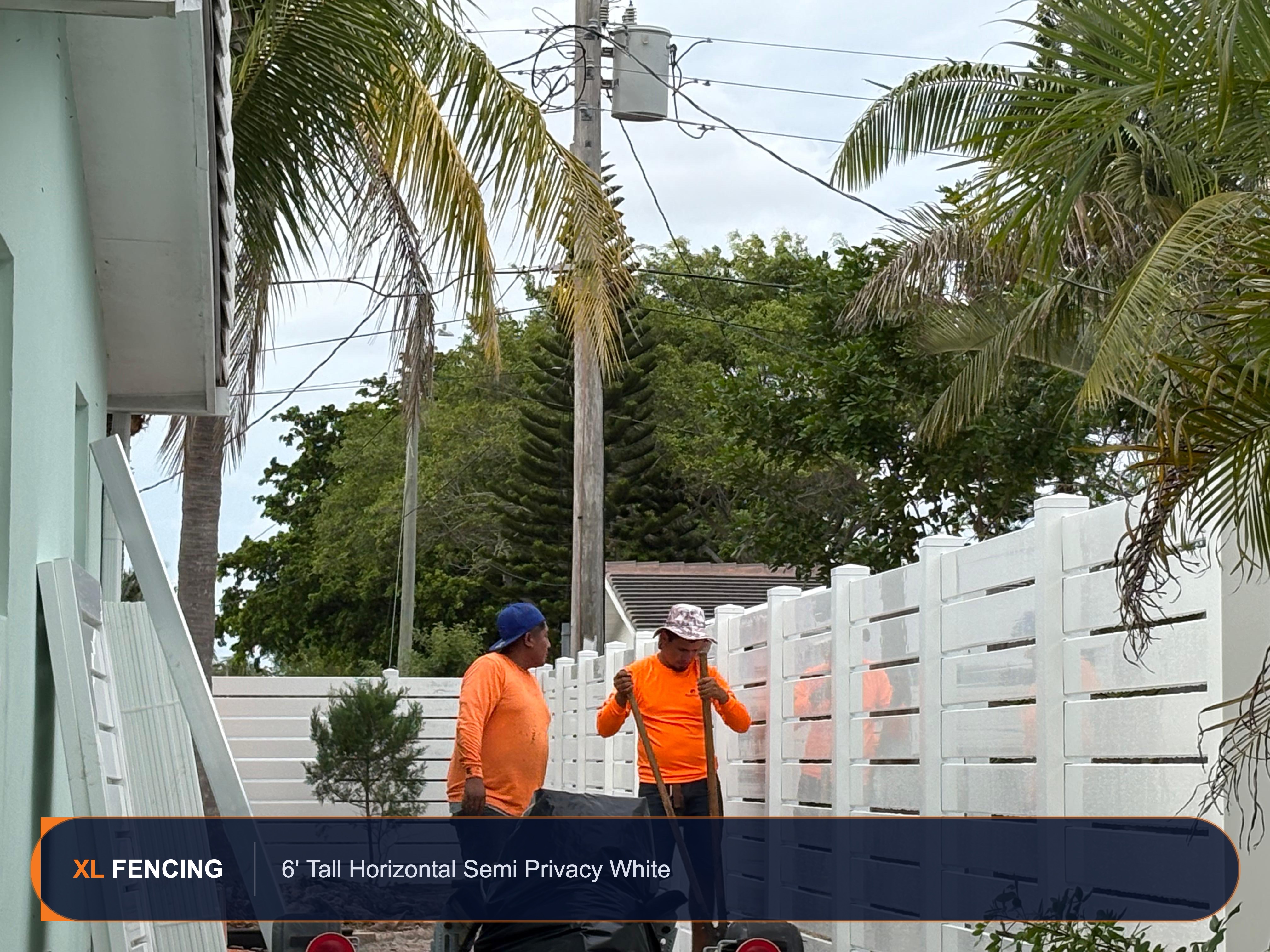
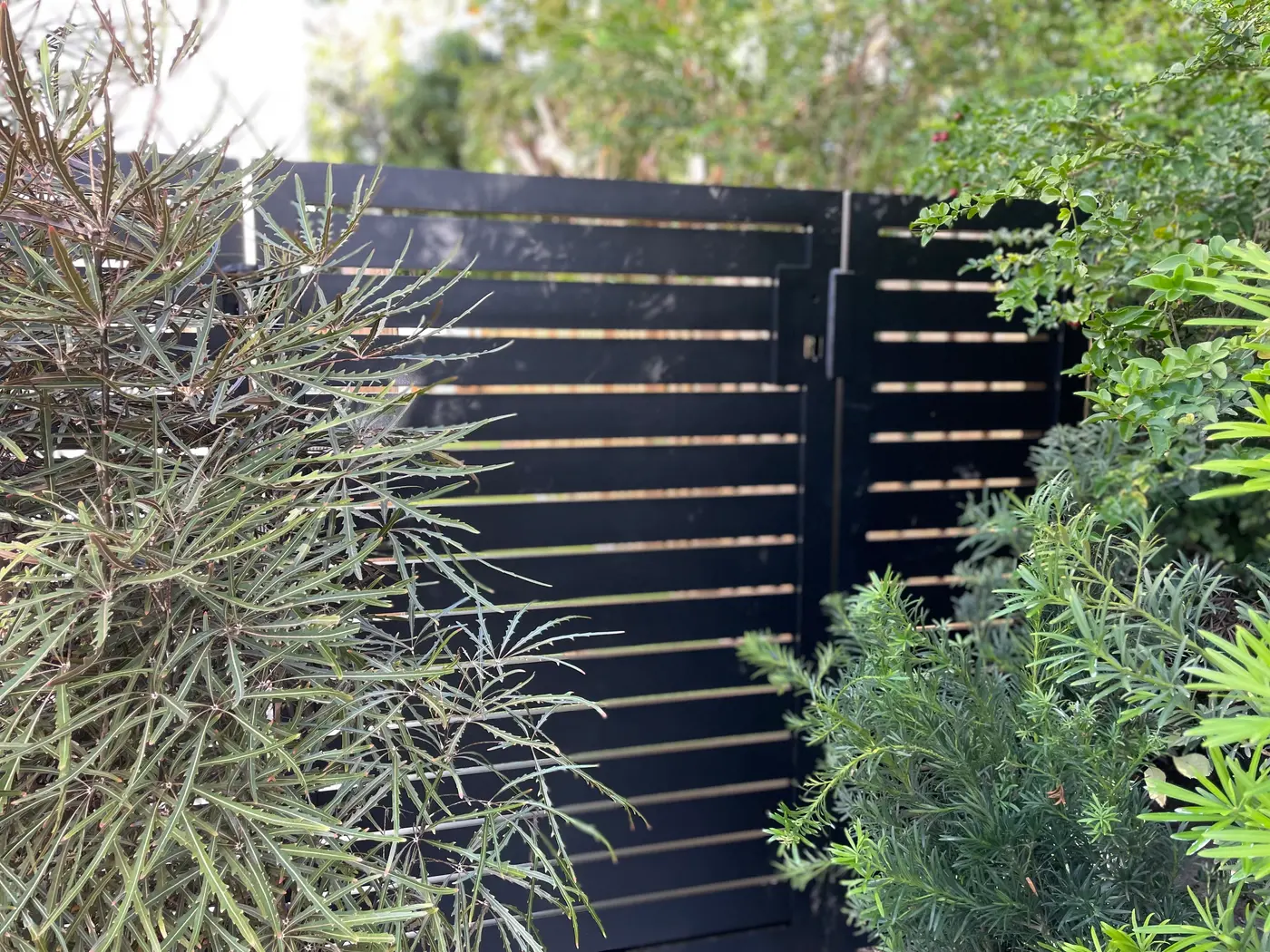
This is the part homeowners miss. A standard 4-foot aluminum picket fence with proper spacing passes easily. A decorative fence with wide gaps, a chain-link with a torn bottom, or a wood fence with a horizontal rail a toddler can use as a foothold — those fail.
The exact opening-size limits (by material)
“No opening passes a 4-inch sphere” is the headline, but the code gets more specific by material — and this is where the wrong fence fails:
- Vertical pickets / members: maximum 1¾″ clear space between them.
- Decorative cutouts: maximum 1¾″.
- Lattice or diagonal members: maximum 1¾″.
- Chain link mesh: maximum 2¼″ square opening.
- Chain link with privacy slats: the opening must be reduced to 1¾″ or less.
And the climb-resistance rule: if the horizontal rails are less than 45 inches apart, the horizontals must be on the pool side of the fence so a child can’t use them as a ladder.
Gates: the most common reason a pool fails inspection
Inspectors scrutinize gates harder than anything else, because a gate is the deliberate hole in your barrier. Every gate must be:
- Self-closing — it swings shut on its own, every time.
- Self-latching — it locks itself when it closes.
- Outward-opening — the gate must swing away from the pool.
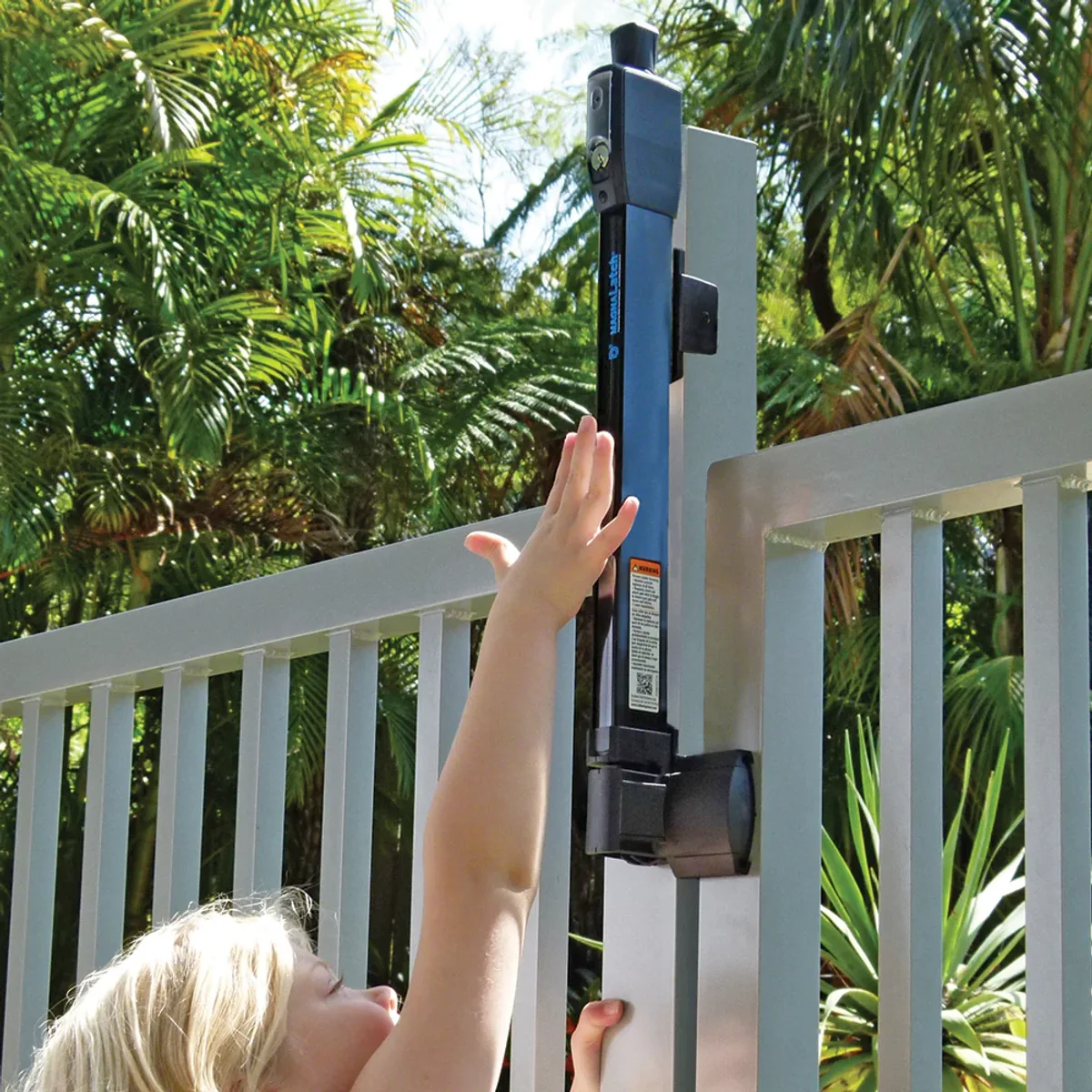
- Latched correctly — the release mechanism sits on the pool side of the gate. If the latch is mounted 54 inches or higher from the bottom of the gate, it can be on the outside. And there can be no opening larger than ½ inch within 18 inches of the latch, so a child can't reach through and trip it.
A surprising number of pools fail because someone installed a gate that's self-closing but not self-latching, or hung it to swing the wrong direction. These are cheap parts and easy fixes — but only if you know to check before the inspector shows up.
One more gate rule people miss: a self-closing, self-latching service gate is required within 10 feet of the pool equipment area, so the equipment pad sits inside a compliant barrier too — not just the pool itself.
Three traps specific to South Florida
Your screen enclosure (pool cage) can count as the barrier. A standard aluminum screen enclosure that meets the R4501.17 spacing and gate requirements qualifies as a "nondwelling wall" and satisfies the barrier requirement. Most Broward and Palm Beach homes with a cage are already partially covered here — but the cage door still has to be self-closing and self-latching.
Using your house wall as part of the barrier triggers alarm requirements. If the wall of your home forms one side of the pool enclosure, every door and window on that wall that opens toward the pool must have an exit alarm or a self-latching device mounted at least 54 inches up. People love the look of the house-as-barrier setup until they learn it means alarming their sliders.
Your perimeter yard fence usually does NOT qualify. The barrier has to be on the perimeter of the pool and meet every spec above. A yard fence on the property line, set far from the pool, almost never satisfies the law on its own — and it leaves the whole yard between the fence and the water open to a child who slips out a back door. This is the single biggest misconception we correct.
The approval process: permit, inspection, and certificate
Here's how it actually goes in Broward and Palm Beach:
- Pull a permit. While the state statute doesn't itself require a fence permit, Broward and Palm Beach municipalities do require one for pool barrier fences. A licensed contractor handles this for you.
- Install to code. Everything above — height, spacing, gate hardware.
- Pass final inspection. The building official inspects the barrier as part of closing out the pool. No compliant barrier, no certificate of completion — and the pool isn't considered legally finished.
A note on the new permit-exemption law (HB 803, effective July 1, 2026): some homeowners have heard that smaller projects under a dollar threshold no longer need a permit. Do not assume that covers your pool barrier. Pool safety barriers are tied directly to the pool's final inspection and certificate of completion, and structural/safety work is generally carved out of these exemptions. Before relying on any exemption, confirm with your local building department. Getting this wrong on a safety barrier is not a corner worth cutting.
County-specific pool-permit process
The barrier requirements are statewide, but how you prove compliance differs by county:
Palm Beach County. The pool barrier is a sub-permit tied directly to your pool permit, and the county requires an “Affidavit of Understanding” signed by both the owner and the contractor. If you’re using a neighbor’s existing fence as part of the barrier, that requires a recorded “Pool Barrier Agreement” between the properties.
Broward County. You submit a barrier-requirement form with your method of compliance checked — typically an approved safety pool cover (ASTM F1346) or a continuous, code-compliant barrier. For most homeowners the continuous barrier is the durable choice.
The HOA layer most homeowners forget
If you live in a deed-restricted community — and a huge share of Broward and Palm Beach homeowners do — passing the building code is only half the battle. Your HOA's Architectural Review Committee (ARC) has its own rules on fence style, color, height, and material, and those rules often exceed the state minimum.
The order of operations matters: get ARC approval in writing before you install. We've seen homeowners build a perfectly code-compliant fence, pass their county inspection, and then get a violation letter from their HOA demanding they tear it out and start over. We give you the documents your HOA needs — contractor license, proof of insurance, and a marked survey — and you submit them to the committee for approval. For the full playbook on clearing your committee, see how to get your fence approved by your HOA in Florida. Keep your approval ID and the approved spec on file; if a dispute ever comes up, that paper is your protection.
How we build a pool fence so it passes the first time
Rather than build to the bare minimum and hope, we install to a safe margin above code on every pool job:
- Height: 5–6 ft (well above the 4-ft minimum).
- Bottom gap: 2 inches or less at finished grade.
- Climb resistance: horizontals on the pool side whenever they’re within 45 inches.
- Picket spacing: 1¾ inches or less.
- Gates: out-swing, self-closing and self-latching, latch at 54″+ — fitted with Magna-Latch pool-rated hardware.
It costs a little more in materials, but it’s the difference between passing inspection on the first visit and eating a re-do plus weeks of delay before you can use your pool.
What this means for your wallet
A code-compliant pool barrier isn't where you want to shop on price alone. The cheap installer who doesn't know the gate latch rule, or spaces the pickets too wide, costs you a failed inspection, a re-do, and weeks of delay before you can use your pool. The numbers in this article aren't suggestions — they're the difference between a passed inspection and a callback.
If you're not sure whether your existing fence qualifies, or you're planning a new pool and want the barrier done right the first time, that's exactly the kind of job a licensed local contractor should handle end to end — permit, install, and inspection. For help choosing a material, see our guide on how to choose a pool fence in South Florida.
Quick FAQ
Does my pool fence have to be 4 feet or 6 feet?
The legal minimum is 4 feet (48 inches) measured from the outside. Many homeowners go taller for privacy, but 4 feet is the code floor for a pool barrier.
Can I use my existing backyard fence?
Only if it sits on the perimeter of the pool and meets every barrier spec — height, gaps, gate hardware. A property-line fence set away from the pool generally does not qualify on its own.
Do removable mesh fences count?
Yes. A mesh barrier that meets the R4501.17 spec and ASTM F2286, installed per the manufacturer's instructions, is an accepted barrier in Florida.
Does a screen enclosure satisfy the requirement?
A standard aluminum pool cage that meets the spacing and gate rules counts as a nondwelling-wall barrier — but the enclosure's access door must still be self-closing and self-latching.
Do I need a permit for a pool fence in Broward or Palm Beach?
Yes. Local municipalities require a permit, and the barrier must pass final inspection before the pool receives its certificate of completion. Confirm any HB 803 exemption with your building department before relying on it.
This article is general information, not legal or code advice. Code requirements change and municipalities can enforce stricter standards. Always verify current requirements with your local building department before installing or relying on any exemption.
Sources & References
- Florida Statutes, Chapter 515 — Residential Swimming Pool Safety Act, §§ 515.27 and 515.29
- 2023 Florida Building Code, 8th Edition — Residential, Section R4501.17 (Residential Swimming Barrier Requirement)
- 2023 Florida Building Code, 8th Edition — Building, Section 454.2.17 (parallel barrier provisions)
- ASTM F1346 (safety pool covers), ASTM F2286 (mesh barriers), UL 2017 (exit alarms)