Installing a fence seems simple: pick a design, hire a pro, and you're done. But in South Florida, especially Broward and Palm Beach counties, there's a step many homeowners overlook until it's too late: the permit.
Fence regulations aren't optional. They exist for safety, aesthetics, and code compliance. And in 2026, some requirements have been updated.
This guide covers everything you need to know about fence permits in these two counties. Avoid fines, headaches, and costly tear-outs.
When Is a Fence Permit Required?
The general rule across most Broward and Palm Beach municipalities: if you're installing a new fence or replacing an existing one, you need a permit.
However, exceptions exist. Minor repairs like replacing a few pickets or straightening a post typically don't require a permit. Temporary fences under a certain height (usually 4 feet) installed for less than 30 days may also be exempt. But caution: replacing an entire existing fence counts as a new installation, even if you keep the same location.
In 2026, several municipal codes have clarified that even small pet fences made of chain link require a permit if they exceed 3 feet in height. When in doubt, always check with your local building department or hire a professional installer who knows current rules.
Height Restrictions in Broward & Palm Beach
Maximum fence height is one area where regulations vary the most between cities, even within the same county.
Generally, for backyards, the maximum height is 6 feet (1.83 meters). For front yards or side yards facing the street, the limit drops to 4 feet (1.22 meters) to maintain visibility and neighborhood aesthetics.
Key differences to note:
- Broward County (unincorporated areas): 6 feet rear, 4 feet front. 8-foot fences require a special variance.
- Palm Beach County (unincorporated areas): Similar, but some suburban zones allow 7 feet if the fence is opaque.
- Fort Lauderdale: Allows 6 feet rear, but requires front yard fences to be at least 50% transparent (e.g., aluminum rail).
- Boca Raton: Has additional restrictions in historic districts where maximum height may be 3.5 feet.
In 2026, several cities have stepped up enforcement using drones to inspect suspicious properties. Exceeding the limit by even a few inches can result in a costly violation.
Pool Fence Code Requirements
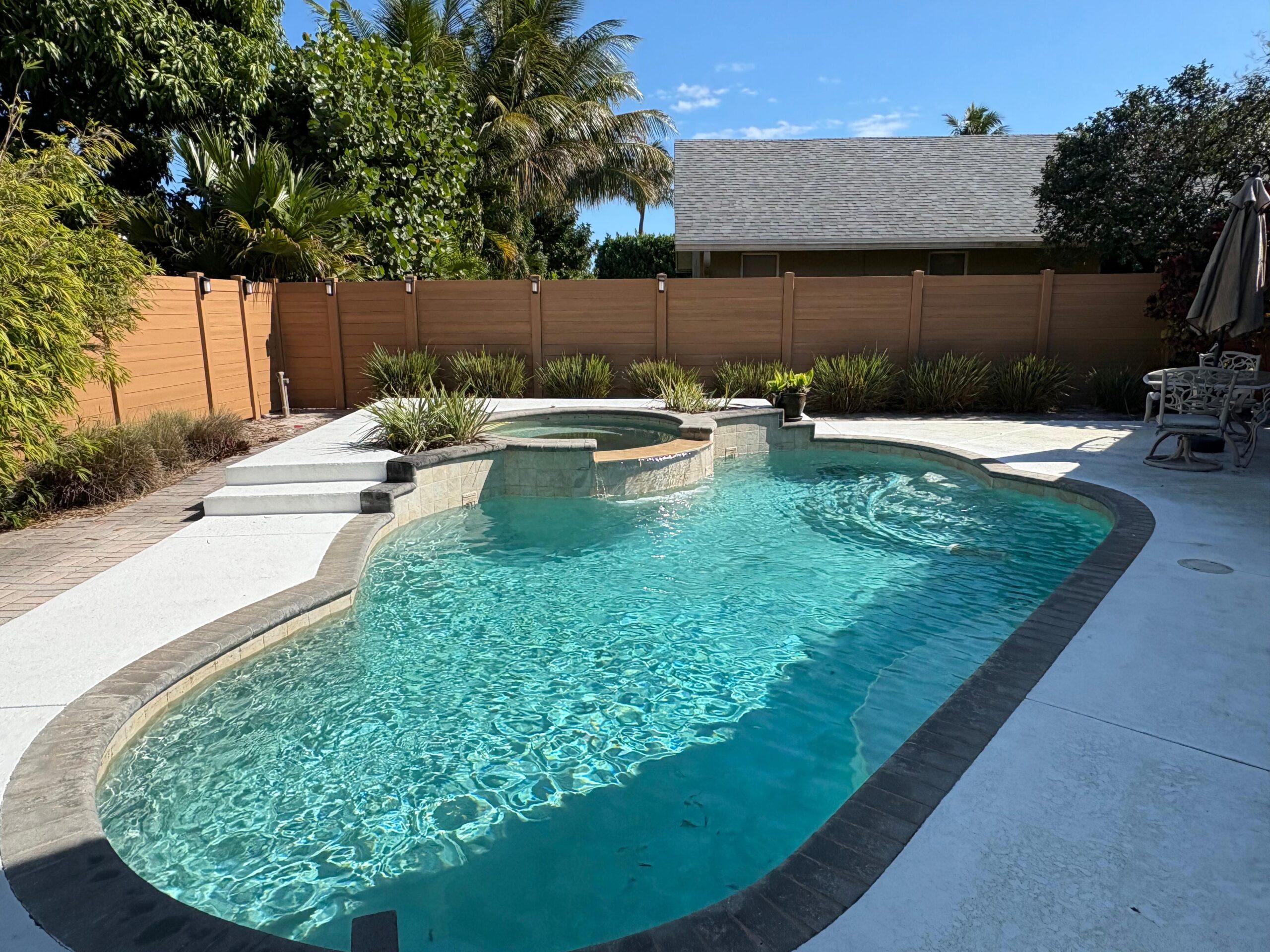
Pools are common in South Florida, and pool fence safety regulations are the strictest of all. The 2026 Florida Pool Safety Code requires every residential pool to be completely surrounded by a barrier that prevents unsupervised access by young children.
Specific requirements for a pool fence permit include:
- Minimum height: 4 feet (1.22 meters) measured from ground level.
- Spacing: No openings larger than 4 inches (10 cm) between rails or pickets. Chain link or mesh openings must not exceed 1.75 square inches.
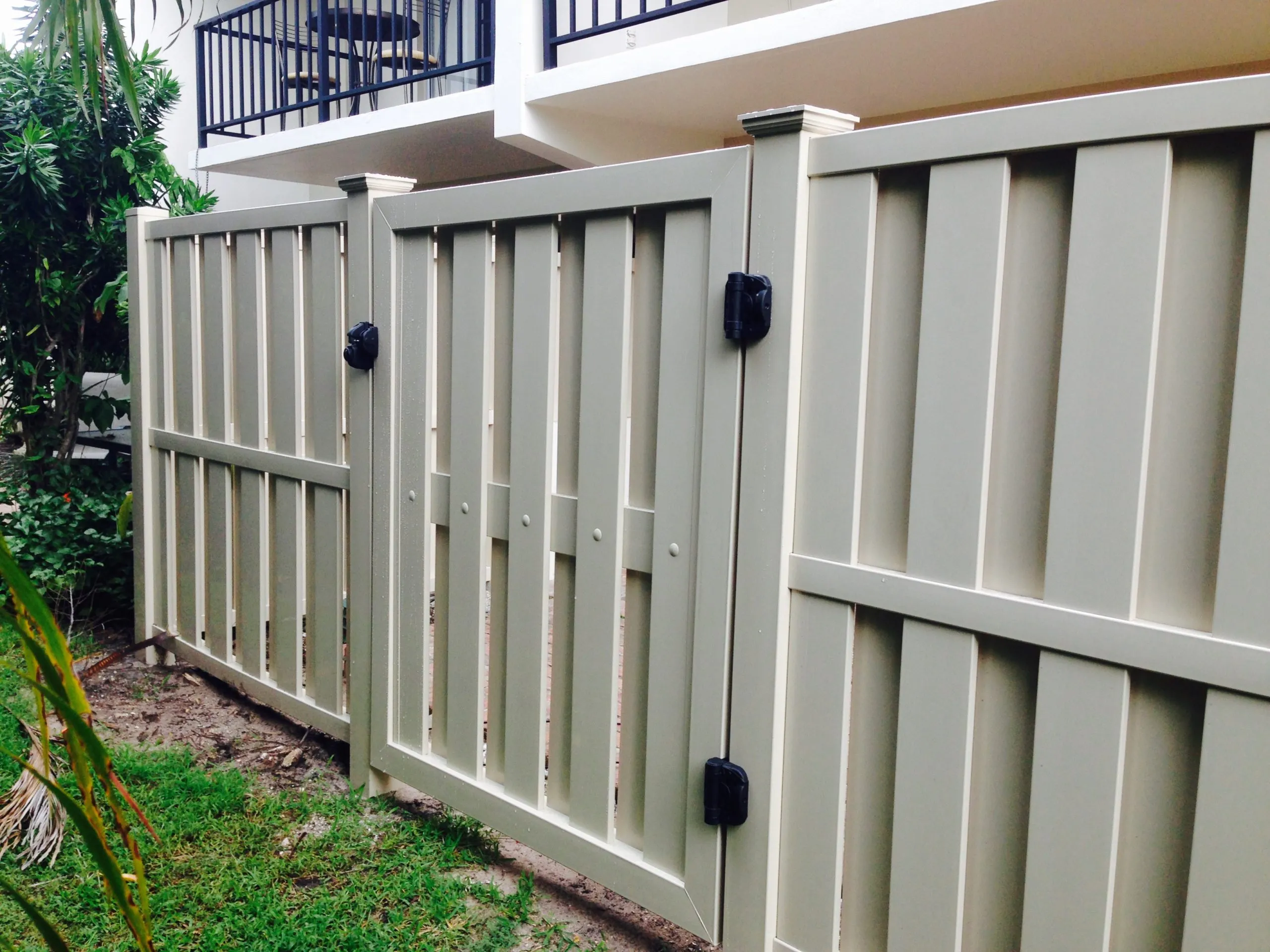
- Gates: Must swing outward, away from the pool, and have a self-closing, self-latching mechanism. The latch handle must be at least 54 inches above ground or have a safety device.
- Climbable zone: No objects (chairs, shrubs, planters) near the fence that could be used to climb over.
If your house forms part of the barrier (e.g., a door directly to the pool area), that door must have an alarm or a high latch. In 2026, a new requirement specifies that alarms must be of a state-approved type.
Without a permit verifying these points, your pool won't pass the mandatory inspection when you sell your home. Many homeowners discover this only after receiving an offer.
HOA Approval Considerations
Here's a crucial detail many overlook: the municipal permit and HOA (Homeowners Association) approval are two completely separate and necessary things.
In Broward and Palm Beach, most planned neighborhoods have HOAs with fence rules that are often stricter than municipal codes. You can obtain a city permit, install a perfectly legal fence, and then receive an HOA letter demanding its removal because the color isn't approved or the style doesn't match the community.
What to do:
- Request in writing the HOA's architectural guidelines before buying materials.
- Submit your plan (design, material, height, color) to the HOA's architectural committee.
- Wait for formal approval before applying for the municipal permit.
In 2026, many HOAs have digitized this process, but approval timelines can extend to 60 days. Factor that time into your project.
Remember: the HOA cannot grant a municipal permit, and the city cannot overrule HOA rules. You need both.
What Happens If You Skip a Permit?
The temptation is understandable: "It's just a fence, who will notice?" But the consequences of skipping a permit are severe and increasingly likely.
Fines: The city or county can impose daily fines from $250 to $500 per day starting from the installation date, accumulating until you remove the fence or obtain a retroactive permit. In 2026, several Broward municipalities have increased these fines to deter violators.
Forced demolition: You'll receive an order to "remove the unpermitted structure." You'll have to pay a contractor to dismantle and haul away your new fence, leaving your yard empty.
Problems when selling: During the pre-sale home inspection, any unpermitted fence will appear in the report. Buyers may demand retroactive permitting (paying double for a permit after installation), removal, or simply lower their offer.
Liability: If someone is injured by an unpermitted fence (e.g., a pool gate that doesn't latch properly), your homeowner's insurance could deny coverage. You'd pay out of pocket.
Neighbor complaints: Never underestimate the neighbor who knows the rules. Fence disputes are among the most common causes of neighbor conflicts in Florida. A single anonymous report can trigger an inspection.
Bottom line: the cost of a permit (typically $150–$400) is a fraction of the cost of fixing the consequences of not having one.
Why Professional Installers Handle This for You
Hiring a professional fence company like XL Fencing doesn't just guarantee quality installation. It also means the fence permit is no longer your problem.
Here's what a professional installer does for you:
- Pre-work research: Before quoting, they verify the specific codes for your city (Broward or Palm Beach). Not all municipalities have the same rules. A pro knows that Fort Lauderdale differs from Pembroke Pines, and West Palm Beach has unique requirements.
- Drawing and application preparation: To obtain a permit, you need drawings showing location, heights, materials, and structural details. Professionals have staff or partners who prepare these plans correctly.
- Municipal filing: They submit the application, pay the fees (which they then bill to you), and follow up. Some cities accept online applications; others still require in-person visits. A pro knows the exact process.
- Scheduled inspections: After fence installation, the municipality must inspect it. The installer schedules the inspection, accompanies the inspector if needed, and resolves any field observations.
- Permit closure: After a passed inspection, the professional ensures the permit is closed on your property record. This is vital for future home sales.
By choosing XL Fencing, you simply enjoy your new fence. We handle the paperwork, the waiting at city counters, and the conversations with inspectors. Plus, as experts in Broward and Palm Beach codes, we avoid common mistakes that could delay your project for weeks.
Ready to install your fence without worrying about permits? Request a free quote today. XL Fencing guides you through the entire process, from HOA approval to final inspection. Discover why we're the trusted choice in South Florida.