A SIDE-BY-SIDE COMPARISON FOR BROWARD & PALM BEACH COUNTY HOMEOWNERS
Choosing the right fencing material for your South Florida home is a significant decision. Many homeowners initially gravitate toward wood fencing, drawn by its traditional appearance and slightly lower upfront cost. However, when you consider our unique climate, strict building codes, and long-term maintenance demands, the choice becomes far less obvious.
This guide provides a clear, data-driven comparison between vinyl and wood fencing. Specifically, we examine how each material performs in Broward and Palm Beach County regarding durability, cost, maintenance, wind resistance, pool safety compliance, and overall long-term value.
| Feature | Vinyl (PVC) Fence | Wood Fence |
|---|---|---|
| Upfront Cost | Slightly higher, often minimal difference | Slightly lower upfront |
| Durability (South Florida) | Excellent when professionally installed | Limited due to climate |
| Heat & Sun Exposure | Maintains shape and alignment | Warps, cracks, and splits — inevitable |
| Moisture & Humidity | Not affected | Absorbs moisture, rot likely |
| Termites & Insects | Not an issue | Common problem |
| Wind Performance | Engineered up to ~85 MPH gusts | More prone to movement |
| Maintenance | Very low | High, ongoing |
| Appearance Over Time | Consistent | Degrades without upkeep |
| Lifespan (South Florida) | 20+ years | 8–12 years |
| Gate Performance | Lightweight, stays square | Heavy, prone to sagging |
| Pool Barrier Safety | Safer gates, consistent spacing | Gates sag, spacing changes |
| Bottom Spacing (Pool Code) | Easier to keep compliant | Often fails over time |
| HOA Preference | Frequently preferred | May require ongoing approvals |
| Warranty | Often lifetime manufacturer warranty | Limited or none |
| Long-Term Cost | Lower total ownership cost | Higher due to maintenance |
Why This Comparison Matters in South Florida
South Florida presents extreme challenges for fencing materials. Our intense sun, high humidity, heavy rain, salty coastal air, and sandy soil all take a toll on exterior structures. Additionally, strict permitting requirements and HOA standards mean your fence must perform consistently for years.
Therefore, understanding how vinyl and wood genuinely compare in this environment is essential before making your investment.
VINYL FENCE VS WOOD FENCE: KEY FEATURES COMPARED
Upfront Cost: A Smaller Gap Than Most Expect
Wood fencing typically carries a slightly lower initial price tag. However, the difference is often minimal. Furthermore, vinyl's slightly higher upfront investment quickly justifies itself through eliminated maintenance expenses and extended lifespan.
Durability in South Florida: Where Vinyl Pulls Ahead
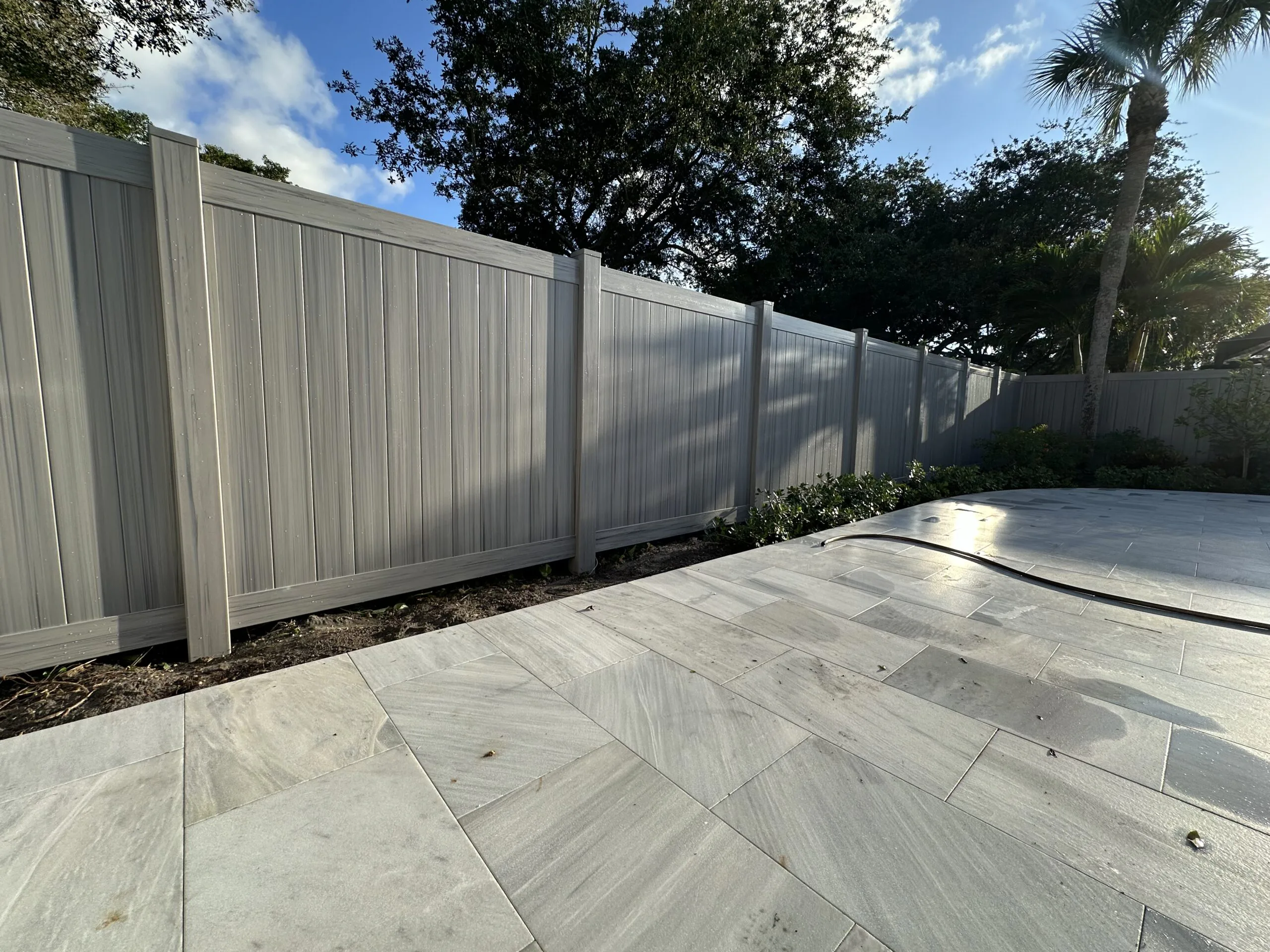
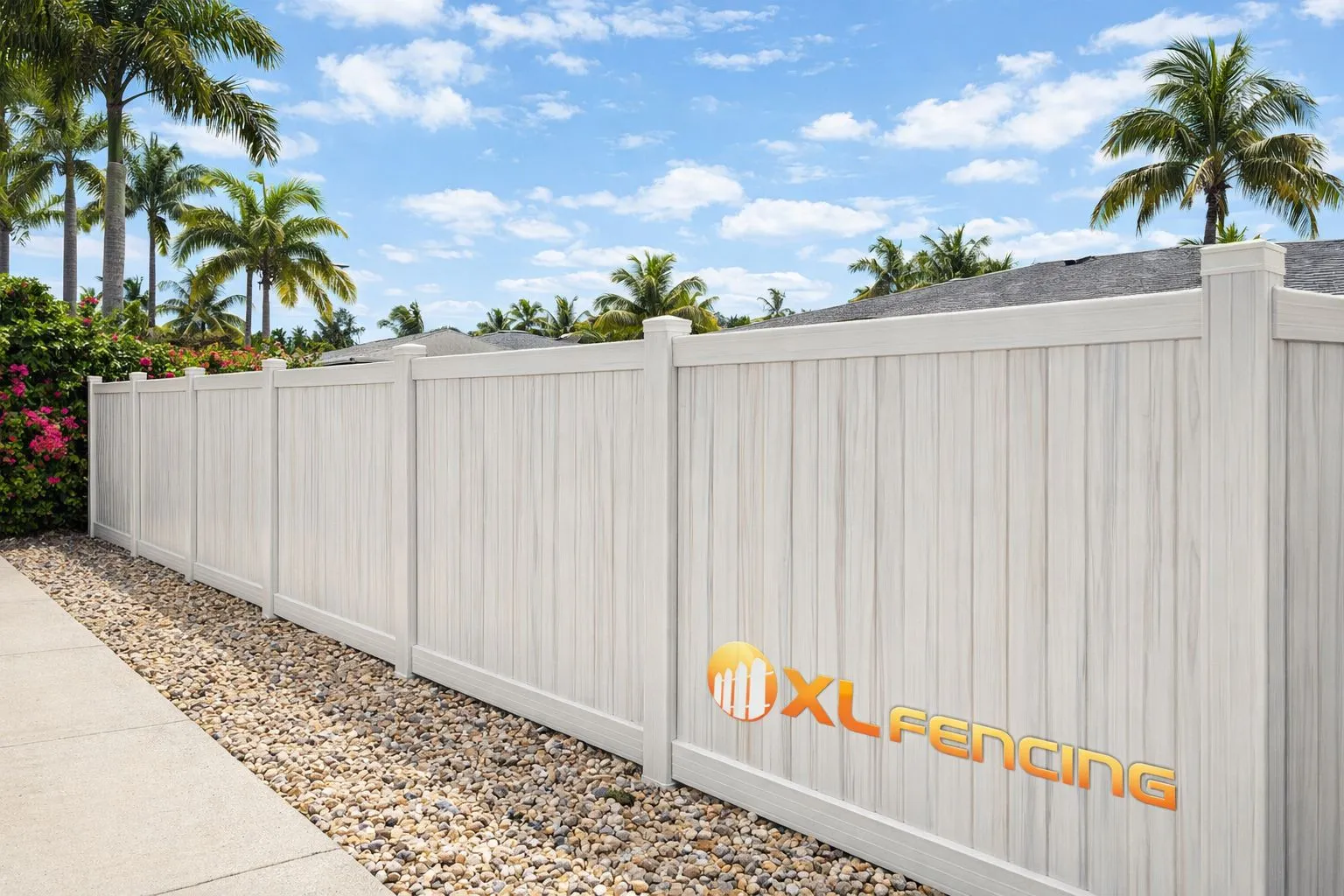
Vinyl fencing performs excellently in our climate when professionals install it correctly. It resists moisture, humidity, and sun exposure without degrading.
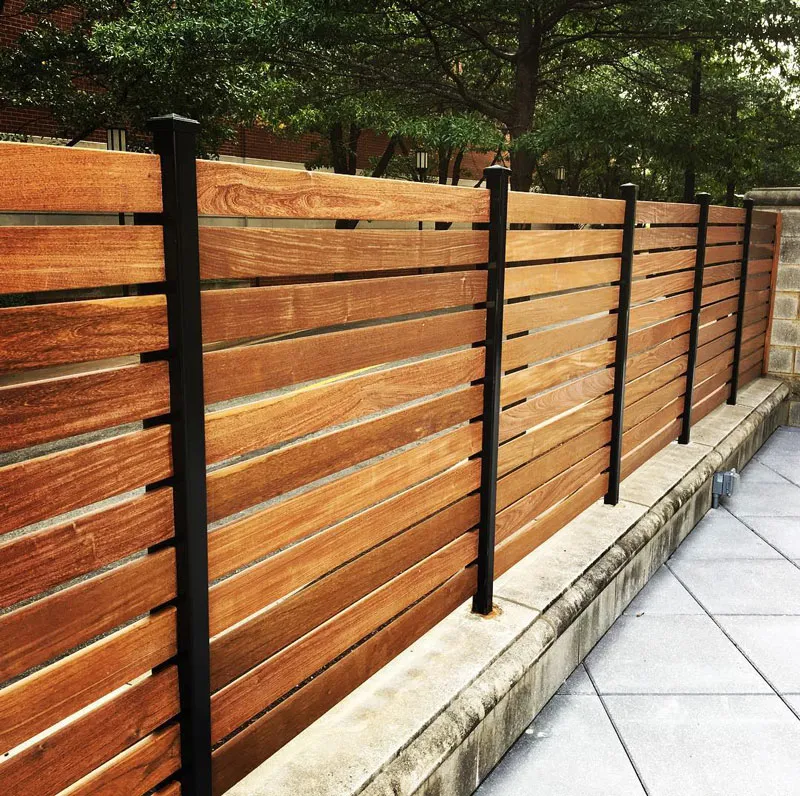
Wood fencing, unfortunately, faces inevitable climate-related deterioration. It warps, cracks, and splits over time. These are not installation defects; they are natural consequences of wood's reaction to heat and moisture. Therefore, wood simply cannot match vinyl's long-term durability here.
Heat and Sun Exposure: Vinyl Maintains, Wood Degrades
Vinyl fencing maintains its shape and alignment despite years of intense Florida sun. It does not warp or twist.
In contrast, wood fencing absorbs heat and moisture unevenly. Consequently, warping, cracking, and splitting are unavoidable. Even the highest-quality wood will eventually show these signs of stress.
Moisture and Humidity: Vinyl Is Unaffected
Vinyl is completely impervious to moisture. It will not rot, swell, or support mold growth.
Wood, however, absorbs moisture readily. This leads to rot, decay, and fungal growth. In our humid environment, this is a constant battle that requires ongoing treatment and vigilance.
Termites and Insects: A Non-Issue for Vinyl
Vinyl fencing is entirely resistant to termites and wood-boring insects. This is a significant advantage in South Florida, where termite pressure is high.
Wood fencing, by contrast, is a food source for termites. Infestations can compromise structural integrity and require expensive remediation or replacement.
Wind Performance: Engineered vs Prone to Movement
High-quality vinyl fence systems are engineered to withstand wind gusts up to approximately 85 MPH. Professional installation and proper post depth are critical to achieving this performance.
Wood fencing is more prone to movement under wind load. Panels can loosen, posts can shift, and gates can become misaligned after severe storms.
Maintenance: Vinyl Requires Almost None
This is perhaps the most significant difference. Vinyl fencing requires only occasional cleaning with soap and water. No painting, staining, sealing, or scraping is ever needed.
Wood fencing demands ongoing, high-maintenance upkeep. Annual staining or sealing is required to slow deterioration. Boards that warp or rot must be individually replaced. Over 10 years, this maintenance burden becomes substantial.
Appearance Over Time: Vinyl Stays Consistent
Vinyl fencing retains its color and finish for decades. It does not fade unevenly or develop surface degradation.
Wood fencing, without constant upkeep, quickly looks tired. It grays, stains, and shows water marks. Even with diligent maintenance, it will never look as pristine as the day it was installed.
Lifespan in South Florida: Vinyl Wins by a Decade or More
A professionally installed vinyl fence typically exceeds 20 years of reliable service. Many manufacturer warranties reflect this confidence.
Wood fencing in South Florida typically lasts 8 to 12 years before requiring complete replacement. The climate simply accelerates its natural lifecycle.
Gate Performance: Vinyl Stays Square, Wood Sags
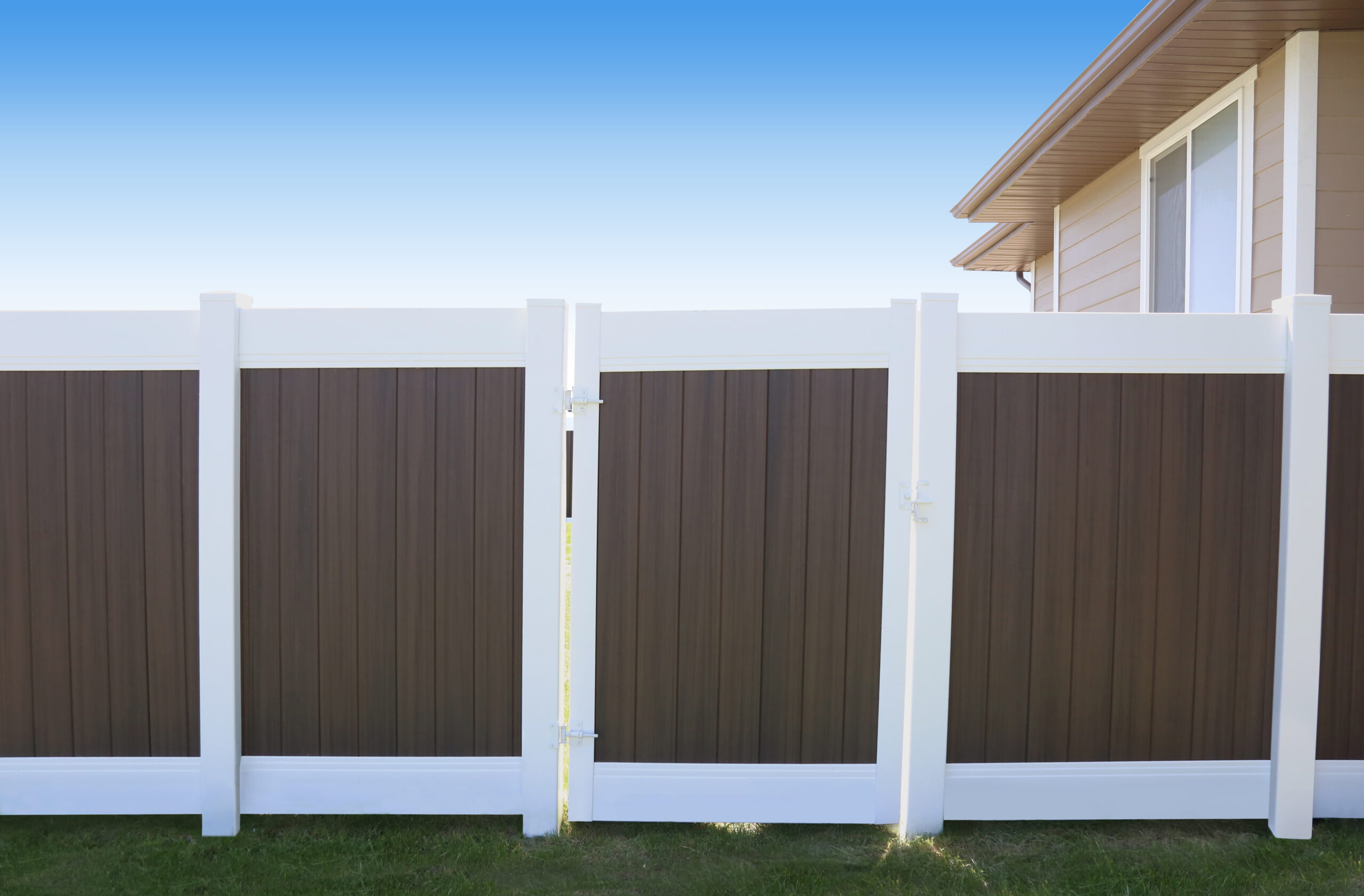
Vinyl gates are lightweight and, when properly reinforced with internal aluminum beams, remain square and operate smoothly for years.
Wood gates are heavy. Consequently, they are prone to sagging over time. Hinges loosen, frames twist, and latches fall out of alignment. This requires frequent adjustments and eventual gate replacement.
Pool Barrier Safety: Vinyl Simplifies Compliance
Florida pool safety regulations are strict and non-negotiable. Vinyl fencing makes compliance easier because it maintains consistent bottom spacing and gates remain properly aligned.
Wood fencing often fails pool safety inspections over time. Gates sag, creating gaps at the bottom or sides. Warping panels can alter spacing. These issues create unsafe conditions and costly rework.
HOA Preference: Vinyl Is Frequently Preferred
Many HOAs in Broward and Palm Beach County readily approve vinyl fencing. Its clean, uniform appearance and long-term predictability align well with community standards.
Wood fencing may require ongoing approvals for staining colors or replacement cycles. Some HOAs restrict wood entirely due to its higher maintenance profile.
Warranty: Lifetime Coverage vs Limited or None
Vinyl fence systems often include comprehensive lifetime manufacturer warranties. These cover material defects and, in some cases, structural performance.
Wood fencing typically carries limited warranties or none at all. Manufacturers understand that wood's natural variability and climate sensitivity make long-term guarantees impractical.
Long-Term Cost: Vinyl Delivers Lower Total Ownership
When you factor in maintenance expenses, repairs, and earlier replacement, wood fencing costs significantly more over time. Vinyl's higher upfront investment is quickly recovered through eliminated upkeep and extended service life.
THE VERDICT: VINYL FENCE VS WOOD FENCE IN SOUTH FLORIDA
For homeowners in Broward and Palm Beach County, vinyl fencing is objectively the superior long-term choice. It outperforms wood in durability, maintenance, wind resistance, pool safety compliance, HOA acceptance, and total cost of ownership.
Wood fencing remains a viable option for those seeking a specific aesthetic or working with very tight immediate budgets. However, homeowners should choose wood with full awareness that warping, cracking, and rot are inevitable in our climate.
At XL Fencing, we install both vinyl and wood fencing systems. We do not push one material over another. Instead, we present the facts clearly and help homeowners select the option that best aligns with their priorities, budget, and long-term expectations.
FREQUENTLY ASKED QUESTIONS
Is vinyl fencing more expensive than wood fencing?
Slightly more upfront, but the gap is often minimal. Over 20 years, vinyl costs significantly less due to zero maintenance and longer lifespan.
Does wood fencing always warp in South Florida?
Yes. Warping, cracking, and splitting are inevitable due to our heat and humidity. This is not a sign of poor installation but a natural characteristic of wood.
Can vinyl fencing withstand hurricane winds?
No fence is hurricane-proof. However, professionally installed vinyl systems are engineered for wind gusts up to approximately 85 MPH.
Is vinyl fencing HOA approved in South Florida?
Most HOAs readily approve vinyl fencing. Its consistent appearance and low maintenance align well with community standards.
Which fence material is better for pool safety?
Vinyl fencing is easier to keep compliant. It maintains consistent bottom spacing and gates do not sag over time.
How long does a wood fence last in Florida?
Typically 8 to 12 years before requiring full replacement.
How long does a vinyl fence last in Florida?
Professionally installed vinyl fences regularly exceed 20 years of reliable service.
READY TO CHOOSE THE RIGHT FENCE FOR YOUR HOME?
At XL Fencing, we help Broward and Palm Beach County homeowners make informed decisions every day. Whether you are comparing vinyl fence vs wood fence for the first time or ready to move forward with a professional installation, our team provides honest guidance, transparent pricing, and exceptional craftsmanship.
Contact us today for a free consultation and quote. Let us help you select the fence that will protect and beautify your property for years to come.