Ultimate guide to PVC & Vinyl fence repair: Tips, tricks, and cost-saving solutions!
When your PVC or vinyl fence shows signs of wear, like cracks, discoloration, or warping, it’s easy to feel frustrated. But minor damage doesn’t have to ruin your outdoor aesthetic or compromise your property’s security! In this ultimate guide to PVC & Vinyl Fence Fixes, we provide practical tips and expert strategies to restore your fence quickly and effectively. From identifying common problems to using cost-effective repair solutions, you’ll learn everything needed to tackle fixes with confidence. Whether you’re a seasoned DIYer or repairing your fence for the first time, our step-by-step methods will help you save money while keeping your fence durable and attractive. Say goodbye to unsightly damage and hello to a beautifully restored barrier that boosts your yard’s appeal. With these proven PVC & Vinyl Fence Fixes, maintaining a strong, stunning fence has never been easier.
Understanding PVC and Vinyl fences: An overview
PVC and vinyl fences have become popular among homeowners for their durability, low maintenance, and versatile appearance. These fences are made from a type of plastic that resists weathering, decay, and insect damage, making them ideal for outdoor use. Unlike wood, PVC and vinyl do not need regular painting or staining, which saves time and effort. They also come in various styles and colors, letting homeowners choose a look that complements their property.
Despite these benefits, PVC and vinyl fences can still sustain damage. Harsh weather, accidents, and general wear may cause cracks, discoloration, or loose panels. Knowing the common issues helps you spot problems early and take action before they worsen.
A major advantage of PVC and vinyl fences is their ease of repair. Many problems can be fixed with simple tools and materials, unlike other fence types that may require full replacement. By understanding their characteristics and typical issues, you can handle repairs confidently and keep your fence both functional and attractive.
Common issues with PVC and Vinyl fences
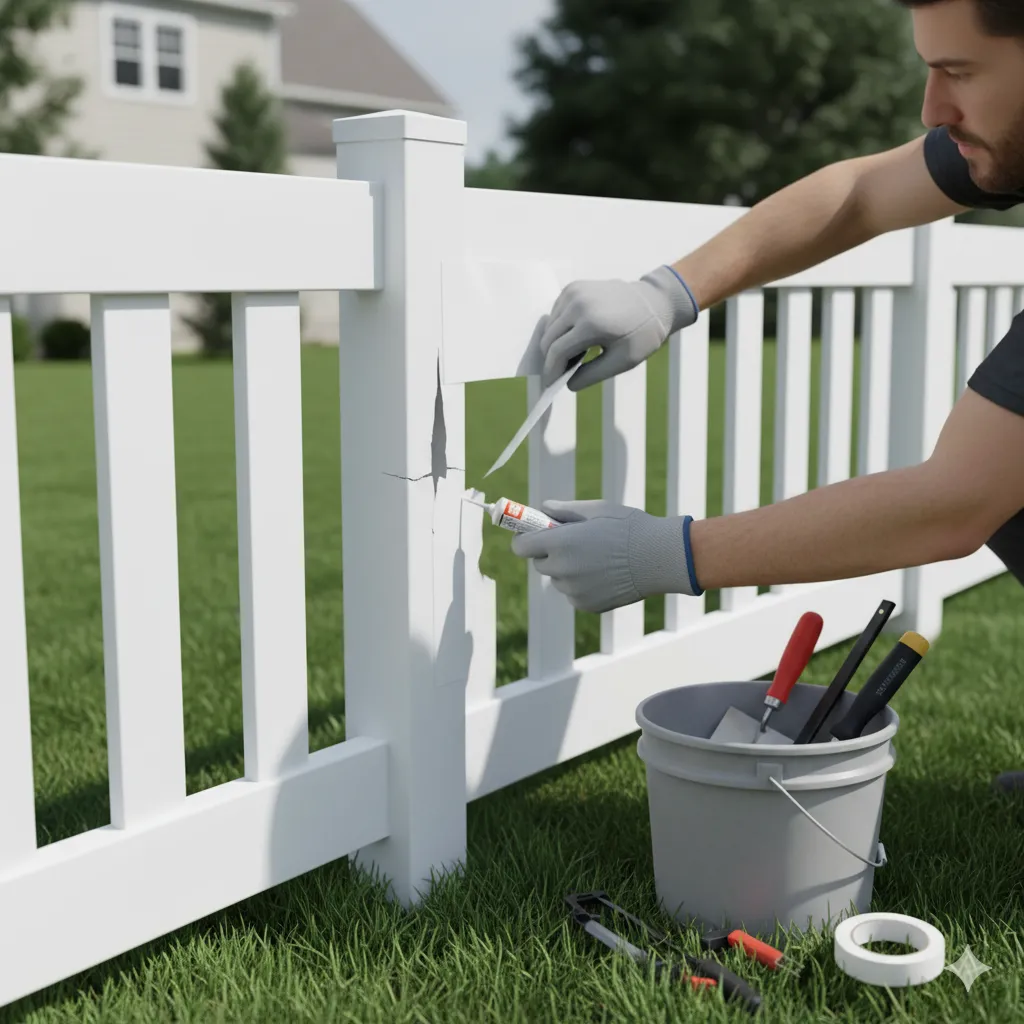
PVC and vinyl fences are durable, but they can still face common problems. One frequent issue is cracking. Extreme weather, such as prolonged sunlight or freezing temperatures, can cause cracks. These cracks may weaken the fence, and if ignored, they can lead to more serious damage. Regular inspections help you spot cracks early and repair them before they worsen.
Discoloration is another concern. Over time, exposure to sunlight, rain, and other elements can fade the fence or cause yellowing. While this usually does not affect functionality, it can reduce your property's curb appeal. Cleaning the fence with proper products and techniques often restores its original color and prevents further fading.
Loose or damaged panels can also occur. Strong winds, accidental impacts, or shifting ground may loosen panels. Loose panels affect both appearance and security. Check your fence regularly and secure or replace any panels that become unstable to maintain its integrity and safety.ity. Regular checks and timely repairs can prevent small issues from becoming more significant problems.
Tools and materials needed for fence repair
Before starting any repair project, gather all necessary tools and materials. Having everything ready makes repairs faster and reduces delays. For PVC & Vinyl Fence Fixes, common tools include a drill, screws, a level, tape measure, rubber mallet, and pliers. These tools help you handle tasks from reattaching loose panels to replacing damaged sections.
In addition to tools, you’ll need specific materials. PVC or vinyl adhesive is essential for fixing cracks or breaks. This adhesive bonds with the fence material, creating a strong and lasting repair. You may also need replacement panels or pickets if some sections are too damaged to fix. Choose panels that match your existing fence in color and style for a seamless repair.
For cleaning and maintenance, keep mild detergent, water, and a soft brush or cloth on hand. These items help remove dirt and discoloration without damaging the fence. For tougher stains or mold, a specialized PVC or vinyl fence cleaner may be required. With the right tools and materials, you can confidently complete any fence repair project and keep your fence looking and functioning at its best.
DIY vs. Professional repair: When to choose which
Deciding whether to tackle a fence repair yourself or hire a professional depends on several factors. For minor issues, such as small cracks or loose panels, a DIY approach can be practical and rewarding. If you have the right tools, materials, and confidence, attempting PVC & Vinyl Fence Fixes yourself can save money and provide a sense of accomplishment.
However, more extensive damage often requires professional expertise. Large cracks, multiple damaged panels, or problems with fence posts may be too complex for a DIY repair. Professionals bring experience and specialized equipment to handle these repairs efficiently. They ensure the work meets industry standards, which is crucial for the long-term durability and safety of your fence.
Time is another consideration. DIY repairs can take longer, especially if you are unfamiliar with the process. If you have limited time or prefer to avoid potential mistakes, hiring a professional is a smart choice. While trying PVC & Vinyl Fence Fixes yourself can be satisfying, professional repairs offer peace of mind and often result in a stronger, longer-lasting fence.
Cost breakdown: How much does fence repair really cost?
Understanding the cost of fence repair helps you plan and make informed decisions. The effort required to repair a PVC or vinyl fence varies depending on the extent of the damage and the materials needed. Minor repairs, such as fixing small cracks or reattaching a loose panel, are usually simple and manageable with basic tools and materials.
For more extensive damage, the repair process can become more involved. Replacing damaged panels or posts may require higher-quality materials and additional effort, depending on the style and durability of your fence.
Hiring a professional can ensure that repairs are done efficiently and to a high standard. While it may require more investment of time and resources upfront, professional services often provide peace of mind by preventing further damage and maintaining the longevity of your fence. Whether you tackle repairs yourself or enlist an expert, understanding the scope of the work helps you achieve a strong, lasting result.
Preventative maintenance tips for longevity
Preventative maintenance is key to extending the lifespan of your PVC or vinyl fence and reducing the need for repairs. Regularly inspecting your fence for signs of damage, such as cracks or loose panels, allows you to address issues early before they worsen. Cleaning your fence periodically with mild detergent and water helps prevent discoloration and keeps it looking its best.
In addition to regular cleaning, it's important to protect your fence from potential sources of damage. Avoid placing heavy objects against the fence, as this can cause panels to become loose or damaged. Be mindful of landscaping around the fence, ensuring that plants and trees are trimmed back to prevent branches from scratching or falling on the fence. If you live in an area with harsh weather conditions, consider installing a protective barrier, such as a windbreak, to shield the fence from strong winds.
Applying a UV protectant to your fence can also help prevent discoloration and damage from sun exposure. These products create a protective layer that shields the fence from harmful UV rays, helping to maintain its color and integrity. By incorporating these preventative maintenance practices into your routine, you can keep your PVC or vinyl fence in top condition and minimize the need for repairs.
Eco-friendly solutions for PVC and Vinyl fence repair
For environmentally conscious homeowners, it's important to consider eco-friendly options when repairing a PVC or vinyl fence. Eco-friendly repairs can help reduce waste and minimize the environmental impact of your project. One approach is to reuse and repurpose materials whenever possible. For example, if a panel is damaged, consider using any salvageable parts for other repairs or projects instead of discarding it completely.
Choosing eco-friendly products for cleaning and maintenance is another way to reduce your environmental footprint. Opt for biodegradable detergents and cleaners that are free from harsh chemicals. These products are not only better for the environment but also gentler on your fence material, reducing the risk of damage. Additionally, consider using natural cleaning methods, such as a mixture of vinegar and water, to clean your fence without the need for commercial products.
When it comes to replacement parts, look for options made from recycled materials. Some manufacturers offer PVC and vinyl fence products that incorporate recycled content, reducing the demand for new raw materials. By choosing these eco-friendly options, you can make a positive impact on the environment while maintaining the quality and appearance of your fence.