Aluminum fence quality: Why wall thickness, alloy grade, and powder coating matter more than the price tag for your property's long-term value.
You've seen them everywhere. Online ads offering aluminum fences at prices that seem too good to be true. And you know what they say about things that seem too good to be true. They usually are.
Behind those attractive price tags lie compromises you can't see with the naked eye. Thinner walls that will bend under pressure. Lower grade alloys that will corrode prematurely. Cheap coatings that will peel and fade within months. These hidden flaws determine the real aluminum fence quality you're getting.
Most companies won't tell you these details. They'd rather you compare prices only, ignoring the technical specifications that separate a 5-year fence from a 25-year one. This article pulls back the curtain. You'll learn exactly what determines aluminum fence quality, how to spot the differences, and why investing in proper materials saves you money in the long run.
Wall Thickness: The Hidden Strength Factor
Let's start with the most critical yet invisible factor: the wall thickness of the aluminum tubes. This measurement, expressed in inches or millimeters, determines how much force your fence can withstand before bending.
Standard residential fences often use 0.050 to 0.065-inch wall thickness. That's acceptable for light-duty applications with minimal stress. But here's what discount companies don't tell you: they often use the absolute minimum, sometimes even below industry standards, to shave pennies off production costs.
Premium aluminum fence quality starts at 0.080-inch wall thickness for residential applications. For commercial projects or areas with high wind exposure, 0.125-inch or even thicker is recommended. Why does this matter? A fence with thin walls will bend if someone leans on it, if a branch falls on it, or simply over time under its own weight in long spans.
The difference isn't visible in photos. You need to hold the pieces, feel the weight, or check the specifications sheet. Reputable manufacturers proudly display their wall thickness. If you can't find this information easily, consider that a red flag about the true aluminum fence quality.
Alloy Grade: Not All Aluminum Is Created Equal
Second critical factor: the aluminum alloy itself. Aluminum comes in various grades, each with different properties. For fencing, the standard is 6063-T6 alloy. Those numbers actually mean something important.
6063 refers to the specific chemical composition, including magnesium and silicon additions that improve strength and corrosion resistance. T6 indicates the heat treatment process that maximizes these properties. Together, they create a material specifically designed for architectural applications like fencing.
What do budget manufacturers use? Often, they source recycled aluminum of unknown origin or lower grade alloys that haven't been properly treated. The result? A fence that looks identical at installation but behaves very differently over time. Lower grade alloys are more prone to corrosion, especially in coastal environments or areas with road salt.
Another trick: some companies mix alloys, using proper grade for visible parts but cheaper material for hidden components. This compromises structural integrity even if the visible aluminum fence quality seems acceptable. Ask direct questions about alloy grade throughout the entire product, not just the main rails.
Powder Coating: The First Line of Defense
Third essential component: the finish. Aluminum doesn't rust like steel, but it does oxidize. That oxidation appears as a white, powdery surface that eventually pits and degrades. The powder coating is what prevents this process.
Premium powder coating involves several steps. First, the aluminum undergoes chemical pretreatment to ensure adhesion. Then, electrostatically applied powder is baked at high temperatures to create a durable, uniform finish. Thickness matters here too: quality coatings measure 2.5 to 3 mils minimum.
Budget fences cut corners in multiple ways. They might skip proper pretreatment, leading to premature peeling. They might apply thinner coatings to save material, leaving gaps in protection. They might use lower quality powders that fade rapidly under UV exposure.
Ask about the coating process and warranty. True aluminum fence quality comes with a comprehensive warranty against fading, chalking, and peeling. If the warranty is vague or short, the manufacturer likely lacks confidence in their finish. A quality powder coating should last 15 to 20 years with minimal maintenance.
Welded vs. Non-Welded Construction
Fourth differentiator: how the fence is assembled. This affects both appearance and structural integrity over time.
Higher quality fences use welded construction at key joints. The horizontal rails are actually welded to the vertical pickets, creating a single, solid unit. This eliminates any possibility of joints loosening over time. The welds are then ground smooth and refinished, becoming invisible in the final product.
Budget alternatives often use pressure-fit or swaged connections. These involve deforming one tube to fit into another, relying on friction to hold things together. Over time, temperature changes and minor impacts can loosen these connections. The fence may never actually fail, but it will develop an annoying rattle and compromised rigidity.
Some mid-range products use concealed mechanical fasteners. These are better than simple pressure fits but still introduce potential failure points compared to welded construction. For maximum aluminum fence quality, welded construction with proper finishing represents the gold standard.
The visible difference? Look closely at the joints where horizontal and vertical pieces meet. On welded fences, you'll see smooth, continuous material. On assembled fences, you'll see seams and transitions that reveal the separate pieces.
Gate Construction: The Weakest Link
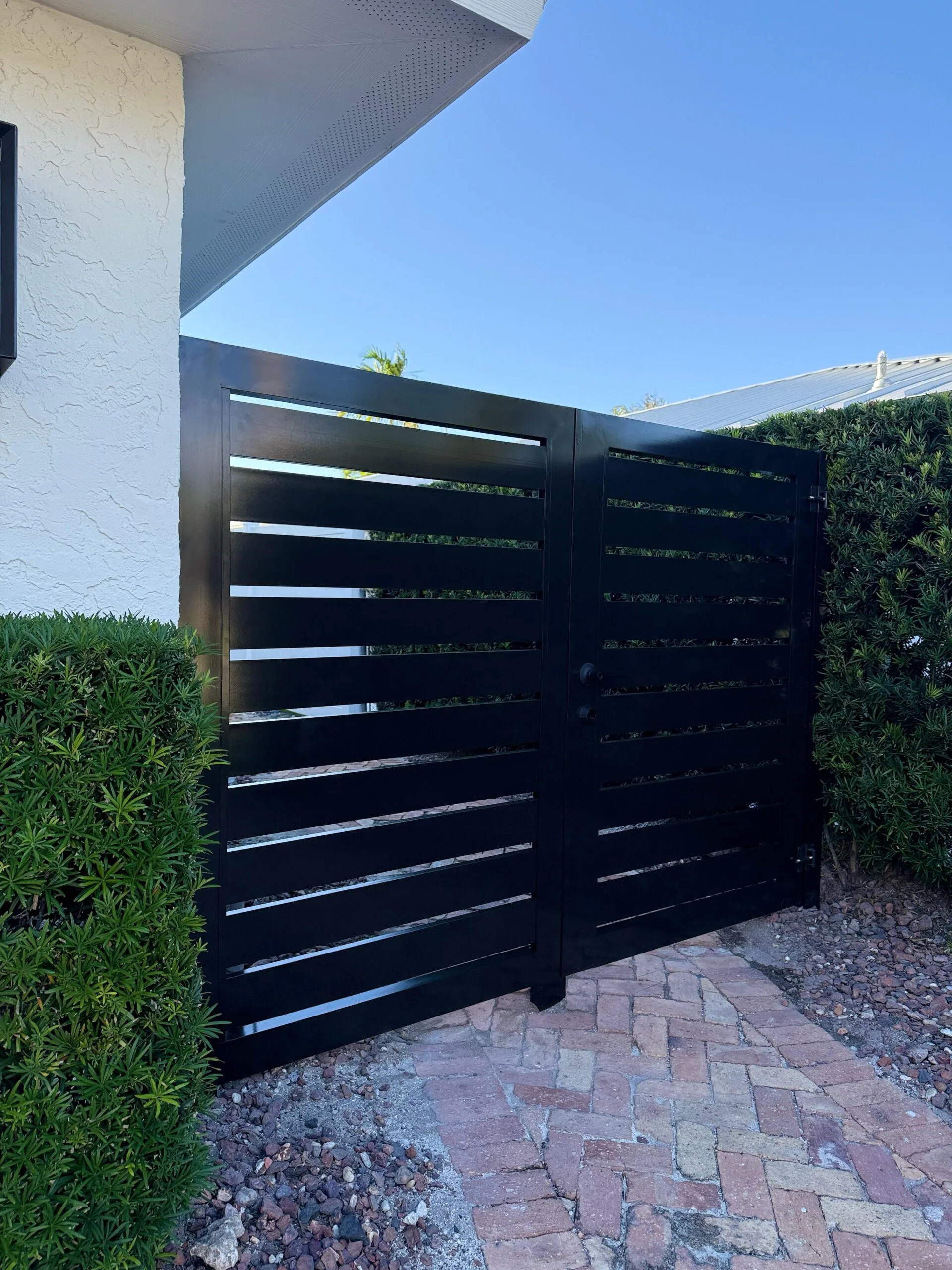
If you want to assess overall aluminum fence quality, examine the gate carefully. Gates face more stress than any other fence component. They hang from hinges, swing open and closed, and bear their entire weight repeatedly.
Quality gates feature reinforced corners with heavy-duty welding or gusset plates. They include adjustable hinges that allow fine-tuning over time as posts settle. They use heavier wall thickness than the matching fence sections because they need the extra strength.
Discount gates often skip these reinforcements. The result? Sagging within months, gates that won't latch properly, and eventual failure at the corners. A sagging gate not only looks terrible but can also create security issues if it no longer closes properly.
Another detail: latch quality. Premium gates use heavy-duty, adjustable latches that accommodate minor movement. Budget gates use simple, non-adjustable latches that work perfectly at installation but become problematic as soon as anything shifts. Ask about gate specifications specifically, not just general fence details.
The Long-Term Cost Equation
Finally, let's talk about what all this means for your wallet. That budget fence might cost 30% less upfront. But over a 20-year period, the calculation reverses dramatically.
A quality aluminum fence should last 25 to 30 years with minimal maintenance. Maybe an occasional wash, perhaps retightening a few screws. The powder coating protects the aluminum, and the aluminum itself doesn't rot, warp, or attract insects.
A budget fence with poor aluminum fence quality might start showing problems within 2 to 3 years. Fading, peeling coating, loose joints, bent sections. By year 10, replacement becomes the only sensible option. You pay again for removal and new installation. Suddenly that "savings" disappears completely.
There's also property value to consider. A quality fence enhances curb appeal and can increase resale value. A cheap, deteriorating fence does the opposite. Potential buyers notice these details, and they'll factor replacement costs into their offers.
The smart approach? View your fence as a long-term investment, not a short-term expense. Pay once for genuine aluminum fence quality, and enjoy decades of trouble-free service. The yearly cost difference becomes negligible when spread over 25 years.
How to Verify Quality Before Buying
So how do you protect yourself from marketing claims and hidden compromises? Here are practical steps to verify aluminum fence quality before committing.
First, ask for detailed specifications in writing. Not just "heavy-duty aluminum," but actual numbers: wall thickness in inches, alloy grade (should be 6063-T6), coating thickness in mils, warranty duration for materials and finish.
Second, request samples if possible. Hold the pieces, feel their weight, examine the welds and finish. Photos can hide many flaws that become obvious in person. A reputable company will gladly provide samples because they're proud of their product.
Third, visit installed fences if you can. See how products look after a few years in real conditions. Ask homeowners about their experience. This real-world evidence beats any marketing material.
Fourth, read warranties carefully. Look for what's covered, what's excluded, and for how long. A 25-year warranty on a 10-year fence is meaningless if the company won't exist in 5 years. Check manufacturer reputation and longevity.
Finally, consider the company itself. Do they answer questions directly? Do they provide clear technical information? Do they seem knowledgeable about their own products? The right company will help you understand why their aluminum fence quality justifies the investment.
Quality Reveals Itself Over Time
In the end, aluminum fence quality isn't about looks at installation day. Both premium and budget fences look great when new. The difference emerges over months and years of exposure to sun, wind, rain, and daily use.
Thicker walls resist bending and stay straight. Proper alloy grades resist corrosion and maintain strength. Quality powder coating protects against fading and peeling. Welded construction eliminates rattles and loose joints. Reinforced gates swing smoothly year after year.
These aren't marketing features. They're engineering decisions that determine whether your fence becomes a lasting asset or a recurring headache. The information is available if you ask the right questions and look beyond the price tag.
At XL Fencing, we believe in transparent specifications and genuine quality. We use 0.080-inch wall thickness minimum, 6063-T6 alloy, premium powder coating with full warranty, and welded construction throughout. Our gates feature heavy-duty reinforcement and commercial-grade hardware. We don't hide behind vague descriptions or "good-better-best" confusion. You deserve to know exactly what you're getting.
Ready to invest in genuine aluminum fence quality for your property? Contact us today for a free quote and detailed specifications you can trust.